English
 Español
 tiếng việt
 русский
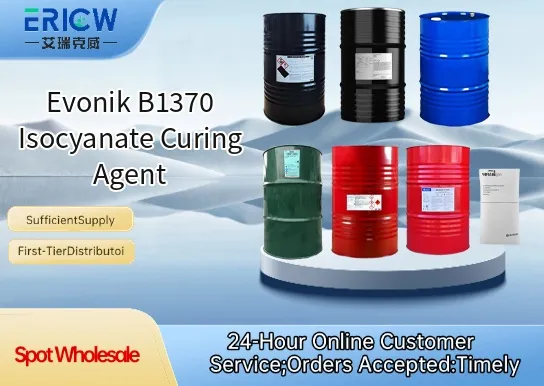
Aliphatic polyisocyanate based on hexamethylene diisocyanate (HDI) trimer chemistry.
Low-viscosity liquid offering excellent compatibility with common polyol resins and ease of handling.
Provides outstanding UV stability and gloss retention in demanding outdoor coating applications.
Enables fast ambient- or low-bake cure profiles without compromising film hardness or chemical resistance.
Compliant with major global VOC regulations for industrial and automotive refinishing coatings.
Automotive OEM and refinish topcoats requiring high durability and color stability.
Industrial maintenance coatings for metal substrates exposed to harsh environmental conditions.
High-performance plastic coatings, including ABS and polycarbonate substrates.
Powder coating hybrid systems where enhanced flow and edge coverage are critical.
| Chemical Type | Aliphatic HDI-based polyisocyanate (trimer) |
| Product Form | Liquid |
| Appearance | Clear, pale yellow liquid |
| NCO Content (wt %) | 21.5 – 22.5% |
| Viscosity at 25 °C (mPa·s) | 800 – 1,200 |
| Density at 20 °C (g/cm³) | 1.19 – 1.21 |
| Flash Point (PMCC, °C) | 145 – 155 |
| Storage Stability (unopened, 25 °C) | ≥ 12 months |
Q1: What is the primary chemical nature of B1370?
A: Evonik B1370 is a low-viscosity, aliphatic polyisocyanate based on hexamethylene diisocyanate (HDI), modified to provide enhanced storage stability and reduced volatility while maintaining excellent reactivity with hydroxyl-functional resins.
Q2: Which resin systems is B1370 typically compatible with?
A: B1370 is designed for use with hydroxyl-terminated acrylics, polyesters, and alkyds in two-component (2K) coatings. It delivers good compatibility, pot life, and film performance—particularly in high-gloss, weather-resistant topcoats for automotive refinish and industrial applications.
Q3: How does B1370 compare to conventional HDI trimer in terms of handling and safety?
A: Due to its tailored molecular structure, B1370 exhibits lower vapor pressure and reduced monomeric HDI content compared to standard HDI trimers, contributing to improved workplace safety and easier handling under ambient conditions—though appropriate PPE and ventilation remain essential during use.
Q4: What is the typical dosage range for B1370 in 2K coating formulations?
A: B1370 is generally used at low concentrations relative to the hydroxyl component—dosage depends on formulation requirements, target NCO:OH ratio, and desired cure profile—but commonly ranges from 0.1% to 2% by weight of the total formulation when optimized for performance and pot life.
Contact With Us:
E-mail: wangxingqiang@ericwchem.com
Have a Questions? Call Us:
Add:
Building A1, Jiete Industrial Park, Huangpu District, Guangzhou City, Guangdong Province, China