English
 Español
 tiếng việt
 русский
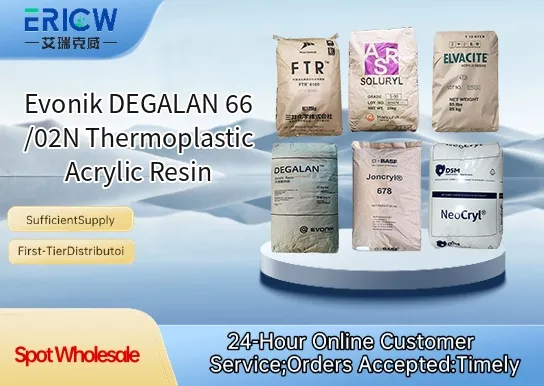
Excellent clarity and UV stability for long-term optical performance.
High melt flow index enabling efficient extrusion and injection molding processing.
Good compatibility with common plasticizers and impact modifiers.
Low inherent viscosity offering balanced mechanical strength and processability.
Compliant with FDA 21 CFR §177.1010 for indirect food contact applications.
Transparent automotive interior trim components.
Medical device housings requiring optical clarity and sterilization resistance.
Consumer electronics front lenses and light guides.
Architectural glazing profiles and decorative panels.
High-gloss packaging inserts and display elements.
| Chemical Type | Poly(methyl methacrylate) (PMMA)-based thermoplastic acrylic resin |
| Product Form | Pellets |
| Appearance | White to slightly yellowish translucent pellets |
| Melt Flow Index (230 °C / 3.8 kg) | 6–8 g/10 min |
| Density (23 °C) | 1.17–1.19 g/cm³ |
| Glass Transition Temperature (Tg) | Approx. 105 °C (DSC, 10 K/min) |
| Primary Applications | Transparent molded parts, extruded profiles, thermoformed sheets |
| Key Features | Optical clarity, thermal stability, low moisture absorption, good dimensional stability |
Q1: What are the primary processing methods suitable for DEGALAN 66/02N?
A: DEGALAN 66/02N is designed for thermoplastic processing techniques including extrusion, injection molding, and hot-melt coating. Its low melt viscosity and good thermal stability support consistent flow and uniform film formation under standard processing conditions.
Q2: How does DEGALAN 66/02N differ from other thermoplastic acrylic resins in terms of solubility and film clarity?
A: This grade offers excellent solubility in common organic solvents such as esters, ketones, and aromatic hydrocarbons, enabling high-solids clear coatings. Films formed from DEGALAN 66/02N typically exhibit outstanding optical clarity, gloss retention, and resistance to yellowing upon aging or UV exposure.
Q3: Is DEGALAN 66/02N compatible with plastic substrates like polycarbonate or ABS?
A: Yes, DEGALAN 66/02N demonstrates good adhesion and compatibility with engineering thermoplastics including polycarbonate and ABS. It is frequently used as a protective topcoat or primer layer where substrate integrity and interfacial bonding are critical.
Q4: Can DEGALAN 66/02N be blended with other polymer systems?
A: It shows favorable miscibility with several thermoplastic polymers—including certain cellulose derivatives and modified polyacrylates—enabling formulation flexibility for tailored mechanical, thermal, or optical performance. Compatibility testing is recommended for specific blends.
Q5: What safety and handling considerations apply during industrial processing?
A: As a thermoplastic resin, DEGALAN 66/02N should be processed below its decomposition temperature to avoid fume generation. Standard industrial hygiene practices—including adequate ventilation and avoidance of prolonged skin contact—are advised. Refer to the Safety Data Sheet for detailed handling, storage, and disposal guidance.
Contact With Us:
E-mail: wangxingqiang@ericwchem.com
Have a Questions? Call Us:
Add:
Building A1, Jiete Industrial Park, Huangpu District, Guangzhou City, Guangdong Province, China