English
 Español
 tiếng việt
 русский
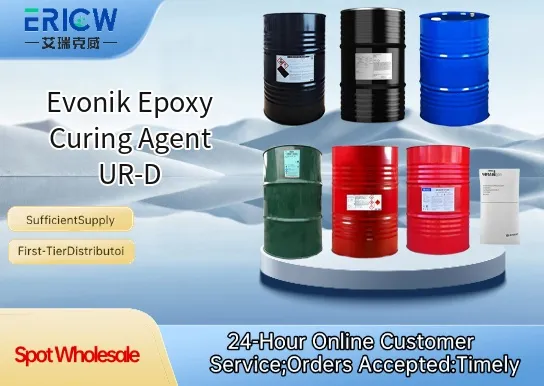
High reactivity with standard epoxy resins, enabling fast gelation and reduced cycle times.
Excellent compatibility with bisphenol-A and bisphenol-F epoxy systems.
Low viscosity for easy handling, precise metering, and homogeneous mixing without solvents.
Good thermal stability and low volatility, supporting safe processing in industrial environments.
Enables high glass transition temperature (Tg) and superior mechanical performance in cured networks.
Structural adhesives for automotive and aerospace bonding.
Electrical encapsulation and potting compounds for power electronics.
High-performance composites in wind turbine blade manufacturing.
Coatings for corrosion protection in oil & gas infrastructure.
Tooling and casting resins requiring rapid turnaround and dimensional stability.
| Chemical Type | Amine-based aliphatic curing agent |
| Product Form | Liquid |
| Appearance | Pale yellow to colorless clear liquid |
| Density (20 °C) | Approx. 0.92–0.95 g/cm³ |
| Viscosity (25 °C) | Approx. 180–220 mPa·s |
| Amine Value | 360–390 mg KOH/g |
| Reactive Hydrogen Equivalent Weight | Approx. 85–92 g/eq |
| Storage Stability | At least 12 months at 25 °C in original sealed container |
Q1: What is the primary function of UR-D in epoxy systems?
A: UR-D is a specialty amine-based curing agent designed to enable rapid ambient- or low-temperature cure of epoxy resins, delivering excellent chemical resistance, adhesion, and mechanical performance in demanding industrial coatings and adhesive formulations.
Q2: Is UR-D suitable for food-contact or potable water applications?
A: UR-D is not pre-qualified for direct food-contact or potable water applications. Formulators must conduct full regulatory evaluation—including migration testing and compliance verification—based on final cured system composition, intended use conditions, and applicable regional regulations.
Q3: How does UR-D compare to conventional aliphatic amines in terms of pot life and reactivity?
A: UR-D offers extended working time (pot life) at ambient temperature compared to highly reactive aliphatic amines, while still enabling efficient cure without forced heating—making it well-suited for large-part coating or on-site adhesive applications where controlled processing is critical.
Q4: Can UR-D be used with standard DGEBA-type epoxy resins?
A: Yes, UR-D demonstrates broad compatibility with conventional liquid and solid bisphenol-A and bisphenol-F epoxy resins. Optimal performance is achieved when resin selection, stoichiometry, and application conditions are aligned during formulation development.
Contact With Us:
E-mail: wangxingqiang@ericwchem.com
Have a Questions? Call Us:
Add:
Building A1, Jiete Industrial Park, Huangpu District, Guangzhou City, Guangdong Province, China