English
 Español
 tiếng việt
 русский
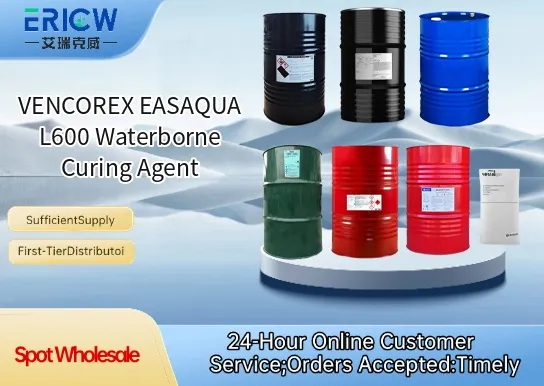
Waterborne polyamine-based curing agent enabling low-VOC, environmentally compliant epoxy formulations.
Excellent compatibility with waterborne epoxy resins and stable dispersion in aqueous systems.
Provides rapid ambient-cure kinetics without requiring forced drying or high-temperature post-cure.
Delivers superior adhesion to concrete, steel, and galvanized substrates in demanding industrial environments.
Non-hazardous classification under GHS: not classified as acute toxicity, skin corrosion, or environmental hazard.
Waterborne epoxy floor coatings for warehouses, pharmaceutical facilities, and food processing plants.
Anti-corrosive primers and topcoats for steel infrastructure including bridges and offshore platforms.
Concrete repair mortars and polymer-modified cementitious overlays requiring fast return-to-service.
High-performance industrial maintenance coatings for chemical plants and power generation facilities.
Low-emission protective coatings for indoor applications where strict VOC and odor limitations apply.
| Chemical Type | Aliphatic polyamine adduct, water-dispersible |
| Product Form | Liquid dispersion |
| Appearance | Opaque white to off-white liquid |
| pH (10% aqueous solution) | 9.5 – 10.5 |
| Non-Volatile Content (wt%) | 48 – 52% |
| Density (20°C) | 1.08 – 1.12 g/cm³ |
| Viscosity (Brookfield, 25°C, spindle #3, 20 rpm) | 2,000 – 4,000 mPa·s |
| Primary Applications | Waterborne epoxy coatings, primers, and repair systems |
Q1: What types of resins is EASAQUA L600 compatible with?
A: EASAQUA L600 is specifically designed for use with waterborne polyurethane dispersions (PUDs), acrylic emulsions, and hybrid polymer systems. It provides efficient crosslinking while maintaining colloidal stability in aqueous formulations.
Q2: How does EASAQUA L600 affect film formation and final film properties?
A: It enhances hardness, chemical resistance, and scrub durability without compromising flexibility or clarity. Film formation remains robust under ambient or mild thermal curing conditions, supporting low-VOC and high-performance waterborne coatings.
Q3: Is EASAQUA L600 suitable for food-contact or sensitive indoor applications?
A: Yes — as a non-isocyanate, waterborne curing agent, it avoids the handling and regulatory concerns associated with traditional blocked isocyanates. Its formulation supports compliance with general requirements for low-emission interior coatings and indirect food-contact applications, subject to final system validation.
Q4: What is the typical dosage range and how should it be incorporated?
A: Dosage depends on formulation requirements but generally ranges from 0.1% to 2% by weight relative to total solids. It is recommended to add EASAQUA L600 during the final stage of dispersion mixing under gentle agitation to ensure uniform distribution without destabilizing the emulsion.
Q5: Does EASAQUA L600 require heat activation, or can it cure at room temperature?
A: It exhibits effective ambient-temperature reactivity with most compatible resins, though full property development may benefit from mild thermal post-curing (e.g., 40–60 °C). The exact profile depends on resin chemistry, pH, and film thickness.
Contact With Us:
E-mail: wangxingqiang@ericwchem.com
Have a Questions? Call Us:
Add:
Building A1, Jiete Industrial Park, Huangpu District, Guangzhou City, Guangdong Province, China