English
 Español
 tiếng việt
 русский
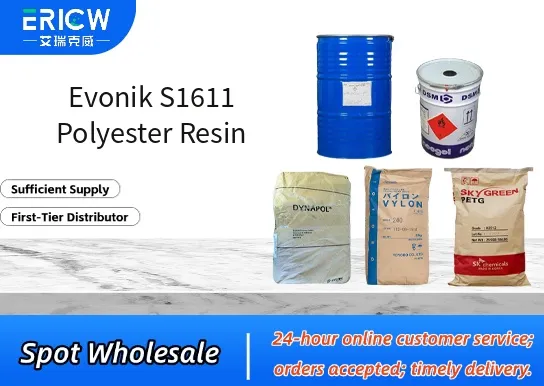
High reactivity with styrene for rapid gelation and efficient production cycles.
Excellent mechanical strength and impact resistance in cured composites.
Good weatherability and UV stability for outdoor applications.
Low viscosity for enhanced fiber wet-out and improved processability in RTM and hand lay-up.
Consistent batch-to-batch reproducibility meeting stringent quality control standards.
Fiberglass-reinforced plastic (FRP) components for transportation, including truck body panels and bus interiors.
Marine structures such as boat hulls, decks, and marine gratings.
Industrial tanks and chemical-resistant linings for corrosion protection.
Architectural cladding, façade elements, and decorative molded parts.
Wind energy components including nacelle covers and blade fairings.
| Chemical Type | Unsaturated polyester resin |
| Product Form | Liquid |
| Appearance | Clear to pale yellow, homogeneous liquid |
| Viscosity (25 °C) | 350–450 mPa·s |
| Reactive Diluent | Styrene (approx. 38–42 wt%) |
| Gel Time (with MEKP, 1.0 wt%, 25 °C) | 12–18 minutes |
| Density (20 °C) | 1.07–1.09 g/cm³ |
| Acid Value | 14–18 mg KOH/g |
Q1: What is the primary function of Evonik S1611 in polyester resin systems?
A: Evonik S1611 is a reactive liquid polyester resin designed to serve as a viscosity modifier and reactive diluent in unsaturated polyester (UP) and vinyl ester formulations. It helps improve processability while maintaining crosslink density and final mechanical performance.
Q2: Is S1611 compatible with standard UP resin curing systems?
A: Yes, S1611 is fully compatible with conventional free-radical initiators such as MEKP and BPO, and integrates smoothly into standard UP resin formulations without requiring significant re-optimization of cure schedules or inhibitor packages.
Q3: How does S1611 affect the mechanical properties of cured composites?
A: When incorporated at typical dosage levels, S1611 contributes to balanced stiffness–toughness profiles. It supports good tensile and flexural strength retention while enhancing impact resistance compared to higher-viscosity base resins—particularly in thick-section or highly filled applications.
Q4: Can S1611 be used in gel coats or surface layers?
A: Yes, S1611 is suitable for use in gel coat formulations where improved flow, reduced styrene emission, and enhanced surface hardness are desired. Its low volatility and reactive nature support excellent surface integrity and reduced pinholing during application.
Q5: What storage conditions are recommended for optimal shelf life?
A: Store S1611 in tightly sealed containers under cool, dry conditions away from direct sunlight and sources of heat or ignition. Under these conditions, it typically maintains stability for at least 12 months from the date of manufacture.
Contact With Us:
E-mail: wangxingqiang@ericwchem.com
Have a Questions? Call Us:
Add:
Building A1, Jiete Industrial Park, Huangpu District, Guangzhou City, Guangdong Province, China