English
 Español
 tiếng việt
 русский
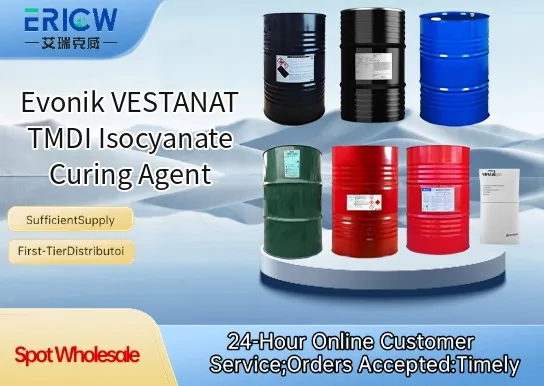
Low-viscosity aliphatic isocyanate offering excellent reactivity with polyols and amines.
Outstanding UV stability and color retention—ideal for high-performance exterior coatings.
Low monomer content ensures improved handling safety and reduced volatility versus conventional HDI-based systems.
Enables fast-cure, low-temperature curing profiles without compromising film hardness or chemical resistance.
Compatible with a broad range of resins including acrylics, polyesters, and polyester-polyol hybrids.
High-gloss automotive clearcoats requiring exceptional durability and gloss retention.
Industrial maintenance coatings for offshore, wind turbine, and heavy equipment applications.
Architectural façade coatings exposed to intense sunlight and weathering.
Powder coating topcoats where low-cure temperature and yellowing resistance are critical.
High-performance plastic coatings for automotive interior and exterior trim components.
| Chemical Type | Aliphatic triisocyanate (based on trimethylhexamethylene diisocyanate) |
| Product Form | Liquid |
| Appearance | Colorless to pale yellow transparent liquid |
| NCO Content (wt %) | 17.0 – 17.8 |
| Viscosity at 25 °C (mPa·s) | 80 – 120 |
| Density at 20 °C (g/cm³) | 1.03 – 1.06 |
| Flash Point (PMCC, °C) | 145 – 155 |
| Storage Stability (unopened, 25 °C) | ≥ 12 months |
Q1: What distinguishes VESTANAT TMDI from other aromatic isocyanate curing agents?
A: VESTANAT TMDI is a low-viscosity, trifunctional aromatic isocyanate based on trimethylhexamethylene diisocyanate chemistry. Its unique molecular structure provides enhanced reactivity control and improved compatibility with hydroxyl-functional resins compared to conventional HDI- or IPDI-based curing agents — particularly beneficial in high-solids and solvent-free coating systems.
Q2: Is VESTANAT TMDI suitable for ambient-cure applications?
A: Yes — VESTANAT TMDI exhibits favorable reactivity at room temperature when paired with appropriate catalysts and resin systems. It is commonly used in ambient-cure industrial maintenance coatings and repair formulations where rapid handling strength and reduced energy input are required.
Q3: How does VESTANAT TMDI impact pot life and film formation in two-component polyurethane systems?
A: Due to its controlled functionality and steric hindrance, VESTANAT TMDI typically offers extended pot life relative to highly reactive triisocyanates, while still enabling efficient crosslinking and robust film development. Pot life depends on formulation variables including resin type, catalyst level, and ambient conditions.
Q4: Can VESTANAT TMDI be used in UV-stabilized or weather-resistant topcoats?
A: Yes — as an aromatic isocyanate, VESTANAT TMDI delivers excellent mechanical performance and chemical resistance. However, for long-term exterior exposure requiring maximum gloss and color retention, it is often recommended in combination with UV absorbers and HALS stabilizers, or in hybrid systems where weathering demands are balanced with performance requirements.
Contact With Us:
E-mail: wangxingqiang@ericwchem.com
Have a Questions? Call Us:
Add:
Building A1, Jiete Industrial Park, Huangpu District, Guangzhou City, Guangdong Province, China