English
 Español
 tiếng việt
 русский
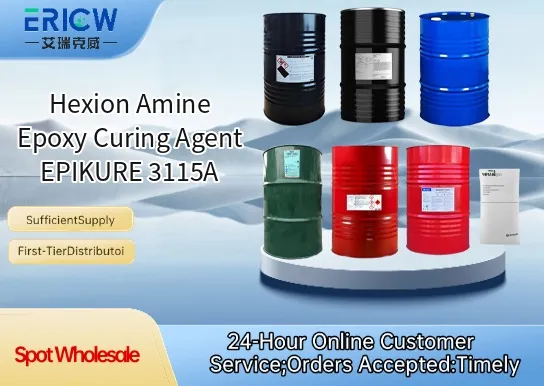
High-reactivity aliphatic amine curing agent designed for fast ambient-cure epoxy systems.
Provides excellent mechanical strength and chemical resistance in cured epoxy networks.
Low viscosity enables easy handling, metering, and thorough mixing with epoxy resins.
Offers good flexibility and impact resistance without compromising thermal stability.
Compatible with standard diglycidyl ether of bisphenol-A (DGEBA) and novolac epoxy resins.
Industrial flooring and heavy-duty concrete coatings.
Structural adhesives for metal, composite, and aerospace bonding.
Electrical encapsulation and potting compounds for power electronics.
Repair mortars and grouts requiring rapid strength development.
Marine and offshore protective coatings exposed to harsh environments.
| Chemical Type | Aliphatic polyamine |
| Product Form | Liquid |
| Appearance | Clear to pale yellow liquid |
| Primary Applications | Ambient-cure structural adhesives, industrial coatings, repair mortars |
| Key Features | Fast cure at room temperature, low viscosity, high crosslink density |
| Benefits | Reduced processing time, improved toughness, excellent adhesion to diverse substrates |
| Storage Stability | Stable under dry, cool conditions (≤25°C); protect from moisture |
| Handling Precautions | Use in well-ventilated areas; wear appropriate PPE including gloves and eye protection |
Q1: What is the primary functional role of EPIKURE 3115A in epoxy systems?
A: EPIKURE 3115A is a polyamine-based curing agent designed to react with epoxy resins, enabling crosslinking and development of thermoset properties such as chemical resistance, mechanical strength, and thermal stability.
Q2: Is EPIKURE 3115A suitable for ambient-cure applications?
A: Yes — it is formulated to provide effective reactivity at room temperature, making it well-suited for ambient or low-heat cure scenarios, particularly in coatings, adhesives, and composite laminates where thermal energy input is limited.
Q3: How does EPIKURE 3115A compare to conventional aliphatic amines in terms of handling and safety?
A: It exhibits reduced volatility and lower skin sensitization potential relative to many standard aliphatic amines, contributing to improved workplace handling characteristics while maintaining robust curing performance.
Q4: Can EPIKURE 3115A be used in high-performance composite formulations?
A: Yes — its molecular architecture supports good compatibility with common epoxy resins and delivers balanced toughness and glass transition temperature in structural composites, especially where post-cure flexibility and interlaminar shear strength are valued.
Q5: What guidance should formulators follow regarding stoichiometry and mixing with epoxy resins?
A: Stoichiometric ratios depend on the specific epoxy resin’s epoxide equivalent weight and the amine hydrogen equivalent weight of EPIKURE 3115A; dosage generally ranges from 0.1% to 2% by weight relative to resin, but optimal levels must be determined empirically based on cure schedule, viscosity targets, and final property requirements.
Contact With Us:
E-mail: wangxingqiang@ericwchem.com
Have a Questions? Call Us:
Add:
Building A1, Jiete Industrial Park, Huangpu District, Guangzhou City, Guangdong Province, China