English
 Español
 tiếng việt
 русский
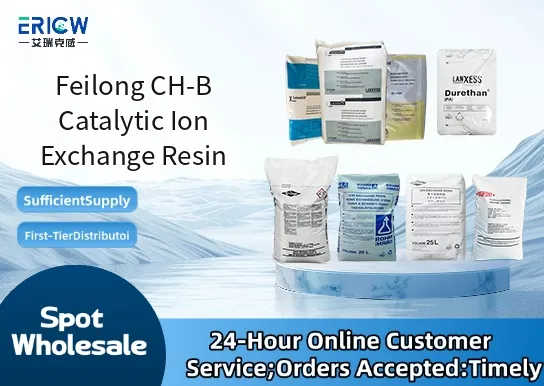
Highly selective catalytic functionality for accelerated hydrolysis and esterification reactions.
Robust sulfonic acid functional groups grafted onto a macroporous polystyrene-divinylbenzene matrix.
Excellent thermal and chemical stability up to 120 °C in acidic aqueous and organic media.
Low leaching of active sites, ensuring consistent catalytic performance over extended service life.
Regenerable via simple acid wash, supporting sustainable process operation and reduced waste generation.
Biodiesel production via transesterification of vegetable oils and waste cooking oil.
Ester synthesis in fine chemical manufacturing, including plasticizers and fragrance esters.
Hydrolysis of nitrile and ester intermediates in pharmaceutical API synthesis.
Dehydration reactions such as etherification (e.g., MTBE precursor processing).
Continuous-flow fixed-bed catalytic reactors for green process intensification.
| Chemical Type | Sulfonated macroporous strong acid cation exchange resin |
| Product Form | Moist spherical beads |
| Appearance | Off-white to light brown, free-flowing beads |
| Functional Group | Sulfonic acid (–SO₃H) |
| Matrix Structure | Crosslinked polystyrene-divinylbenzene (DVB ≥ 8%) |
| Ion Exchange Capacity | ≥ 4.8 meq/g (dry basis) |
| Particle Size Range | 0.3–1.2 mm (95% retained on 16–60 mesh sieves) |
| Moisture Content | 45–55% (as shipped) |
Q1: What is the primary catalytic function of Feilong CH-B in ion exchange applications?
A: Feilong CH-B is engineered to accelerate selective ion exchange reactions—particularly for metal ion removal and pH stabilization—through its functionalized macroporous matrix, which provides enhanced accessibility and kinetic efficiency compared to conventional resins.
Q2: Is Feilong CH-B suitable for use in food-contact or pharmaceutical water treatment systems?
A: Yes—Feilong CH-B is manufactured under strict quality control protocols and is commonly deployed in high-purity water polishing for pharmaceutical and food-grade applications, provided system validation and regeneration protocols meet end-use regulatory expectations.
Q3: How does Feilong CH-B differ from standard strong acid cation (SAC) resins?
A: Unlike conventional SAC resins, Feilong CH-B integrates catalytically active sites within a thermally and chemically robust backbone, enabling improved regeneration efficiency, reduced acid consumption, and sustained performance under fluctuating feedwater conditions.
Q4: What are the recommended storage conditions to maintain long-term activity?
A: Store Feilong CH-B in its supplied wet form at temperatures between 5 °C and 40 °C, away from direct sunlight and strong oxidants. Prolonged exposure to dry air or freezing conditions should be avoided to prevent physical degradation or loss of catalytic integrity.
Contact With Us:
E-mail: wangxingqiang@ericwchem.com
Have a Questions? Call Us:
Add:
Building A1, Jiete Industrial Park, Huangpu District, Guangzhou City, Guangdong Province, China