English
 Español
 tiếng việt
 русский
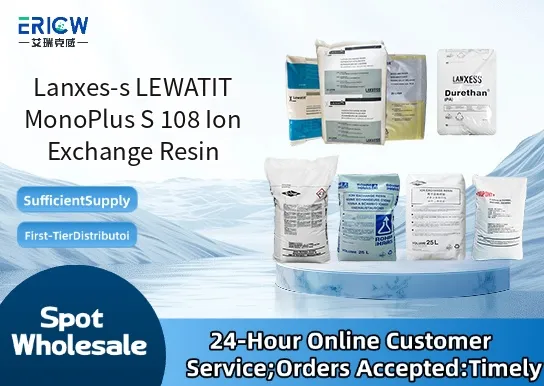
Highly uniform spherical beads ensure low pressure drop and excellent hydraulic performance in fixed-bed systems.
Strong acid cation exchange resin with sulfonic acid functional groups for efficient removal of multivalent cations.
Optimized for high regeneration efficiency and consistent capacity retention over multiple service cycles.
Excellent chemical and osmotic stability, suitable for demanding industrial water treatment environments.
Low fines generation and high mechanical strength minimize resin loss and system fouling.
Deminalization and softening in high-purity boiler feed water systems.
Pre-treatment for reverse osmosis (RO) and electrodeionization (EDI) units.
Cation removal in pharmaceutical-grade purified water (PW) and water-for-injection (WFI) production.
Metal recovery and wastewater polishing in electroplating and metal finishing industries.
Process water conditioning for food & beverage manufacturing and semiconductor rinse water.
| Chemical Type | Strong acid cation exchanger (sulfonated polystyrene-divinylbenzene) |
| Product Form | Moist, spherical beads |
| Appearance | Opaque amber to brown beads |
| Functional Group | Sulfonic acid (–SO₃H) |
| Ionic Form | Na⁺ form (standard shipping condition) |
| Particle Size Range | 0.315 – 1.25 mm |
| Uniformity Coefficient | ≤ 1.6 |
| Moisture Content | 45 – 50 % (w/w) |
Q1: What is the primary functional group and ionic form of LEWATIT MonoPlus S 108?
A: LEWATIT MonoPlus S 108 is a strongly acidic cation exchange resin based on a styrene-divinylbenzene matrix, functionalized with sulfonic acid groups. It is supplied in the sodium (Na⁺) form, making it suitable for softening and selective cation removal applications.
Q2: How does MonoPlus S 108 differ from conventional gel-type cation resins in terms of structure and performance?
A: MonoPlus S 108 features a uniform particle size distribution (monodisperse beads) and a macroporous morphology, which enhances kinetic performance, improves hydraulic stability under variable flow conditions, and reduces pressure drop compared to standard gel-type resins—especially in systems with suspended solids or fluctuating feed quality.
Q3: Is this resin suitable for use in pharmaceutical or food-grade water purification?
A: Yes—LEWATIT MonoPlus S 108 is manufactured and tested to meet requirements for use in high-purity water applications, including those supporting pharmaceutical and food-grade processes. It complies with relevant global regulatory expectations for ion exchange resins used in water treatment, subject to proper regeneration and system validation.
Q4: What are the recommended regeneration chemicals and typical operating temperature limits?
A: Regeneration is typically performed using sodium chloride (NaCl) solution for softening mode, or hydrochloric acid (HCl) when operated in the hydrogen form. The resin is stable for continuous operation up to 120 °C, though long-term service life is optimized below 100 °C depending on cycle frequency and chemical exposure.
Contact With Us:
E-mail: wangxingqiang@ericwchem.com
Have a Questions? Call Us:
Add:
Building A1, Jiete Industrial Park, Huangpu District, Guangzhou City, Guangdong Province, China