English
 Español
 tiếng việt
 русский
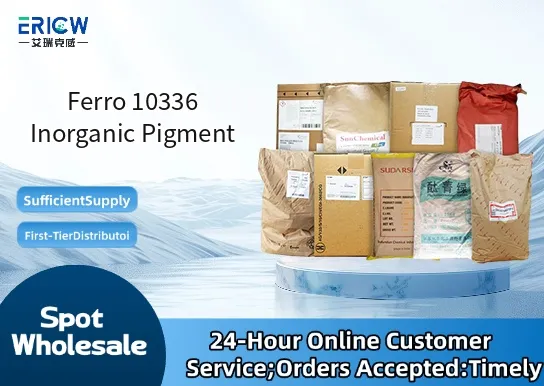
High thermal stability suitable for processing temperatures up to 1200°C.
Excellent chemical resistance to acids, alkalis, and solvents in demanding industrial environments.
Consistent particle size distribution ensuring uniform dispersion and color development.
Non-toxic and heavy-metal-free formulation compliant with global regulatory requirements including RoHS and REACH.
Outstanding lightfastness and weather resistance for long-term outdoor performance.
Ceramic glazes and underglaze decorations for tableware and sanitaryware.
Colorants in architectural and technical ceramics, including tiles and refractory products.
Pigmentation of vitreous enamels for metal substrates such as appliances and cookware.
Functional coloring agents in high-performance glass frits and low-expansion glass composites.
| Chemical Type | Mixed Metal Oxide (Spinel-based) |
| Product Form | Fine, free-flowing powder |
| Appearance | Uniform reddish-brown to dark brown granular powder |
| Primary Applications | Ceramics, vitreous enamels, glass frits |
| Key Features | Thermally stable, chemically inert, non-volatile |
| Benefits | Color consistency across firing cycles, minimal batch variation |
| Storage Conditions | Keep in cool, dry place; protect from moisture and contamination |
Q1: What is the primary chemical composition of Ferro 10336?
A: Ferro 10336 is a high-performance inorganic pigment based on a complex metal oxide system, engineered for thermal and chemical stability. Its exact formulation is proprietary, but it contains no heavy metals of concern such as lead, cadmium, or hexavalent chromium.
Q2: Is Ferro 10336 suitable for use in food-contact plastics?
A: Yes — Ferro 10336 is formulated to meet global regulatory expectations for pigments used in food-contact polymers, including compliance with FDA 21 CFR guidelines for indirect food additives and relevant EU framework principles. Final regulatory clearance depends on the specific end-use application and processing conditions.
Q3: How does Ferro 10336 perform under high-temperature processing?
A: This pigment demonstrates excellent thermal stability, retaining color integrity and dispersion quality during standard polymer processing operations such as injection molding, extrusion, and blow molding — typically up to 300°C, depending on residence time and matrix compatibility.
Q4: What is the typical dosage range for Ferro 10336 in polyolefin applications?
A: Dosage is formulation-dependent, but Ferro 10336 is generally effective at low concentrations — typically ranging from 0.1% to 2% by weight in polyolefins — with optimal loading determined by desired opacity, chroma, and processing requirements.
Q5: Can Ferro 10336 be used in engineering thermoplastics like PBT or PPS?
A: Yes — Ferro 10336 exhibits good compatibility with a range of engineering thermoplastics, including PBT and PPS, provided proper dispersion techniques are employed. Performance should be validated under actual processing conditions due to variations in melt temperature and shear sensitivity.
Contact With Us:
E-mail: wangxingqiang@ericwchem.com
Have a Questions? Call Us:
Add:
Building A1, Jiete Industrial Park, Huangpu District, Guangzhou City, Guangdong Province, China