English
 Español
 tiếng việt
 русский
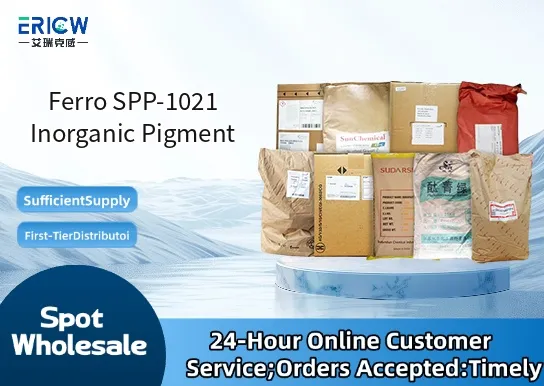
High thermal stability suitable for processing temperatures up to 800 °C.
Excellent chemical resistance to acids, alkalis, and solvents in demanding industrial environments.
Consistent particle size distribution ensuring uniform dispersion and color reproducibility.
Non-toxic formulation compliant with major global regulatory frameworks for industrial pigments.
Low oil absorption enabling efficient loading in high-solids formulations without viscosity penalty.
Ceramic glazes and underglaze decorations for architectural and tableware ceramics.
High-performance refractory coatings used in kiln furniture and furnace linings.
Colorants for specialty glass batches requiring heat-stable, non-volatile pigmentation.
Pigment component in inorganic-based architectural coatings for façade and fire-rated systems.
Additive in thermally cured powder coatings for metal substrates exposed to elevated service temperatures.
| Chemical Type | Mixed-metal oxide (iron-chromium spinel-based) |
| Product Form | Fine dry powder |
| Appearance | Uniform dark brown to black granular powder |
| Primary Applications | Ceramics, refractories, specialty glass, high-temp coatings |
| Key Features | Thermal stability, pH neutrality, low water solubility |
| Benefits | Color retention after firing, minimal batch variation, no heavy metal leaching |
| Density (g/cm³) | 4.2–4.5 |
| Particle Size (D₅₀, μm) | 1.8–2.4 |
Q1: What is the primary chemical composition and classification of Ferro SPP-1021?
A: Ferro SPP-1021 is a high-performance inorganic pigment based on a mixed-metal oxide system, engineered for thermal and chemical stability. It is classified as a complex inorganic colored pigment (CICP), not containing regulated heavy metals such as lead, cadmium, or mercury, and is designed for demanding industrial applications where durability and regulatory compliance are essential.
Q2: Is SPP-1021 suitable for use in food-contact plastics or packaging materials?
A: While SPP-1021 is formulated to meet general safety expectations for indirect food contact, it is not pre-approved under specific global food-contact regulations (e.g., FDA 21 CFR or EU Framework Regulation). End users must conduct full regulatory assessment—including migration testing and formulation review—based on their final application, processing conditions, and target market requirements.
Q3: How does SPP-1021 perform under high-temperature processing conditions?
A: SPP-1021 exhibits excellent thermal stability and retains its color integrity during standard polymer processing, including injection molding and extrusion at temperatures up to approximately 300 °C. Its inorganic nature minimizes risk of thermal degradation or gas evolution, making it suitable for engineering thermoplastics and high-heat resins.
Q4: What dispersion methods are recommended for optimal color development and consistency?
A: For best results, SPP-1021 should be incorporated using high-shear compounding techniques—such as twin-screw extrusion—with appropriate carrier resins or masterbatch vehicles. Pre-wetting with compatible processing aids may improve wetting efficiency. Avoid low-energy mixing methods that could result in agglomerates or uneven hue distribution.
Q5: Can SPP-1021 be used in combination with other pigments or effect additives?
A: Yes, SPP-1021 is generally compatible with common organic pigments, other inorganic pigments, and non-reactive effect additives (e.g., certain metallic flakes or silica-based matting agents). However, compatibility testing is strongly advised—especially when blending with acid-sensitive or reducing agents—to prevent unintended interactions affecting shade, stability, or dispersion quality.
Contact With Us:
E-mail: wangxingqiang@ericwchem.com
Have a Questions? Call Us:
Add:
Building A1, Jiete Industrial Park, Huangpu District, Guangzhou City, Guangdong Province, China