English
 Español
 tiếng việt
 русский
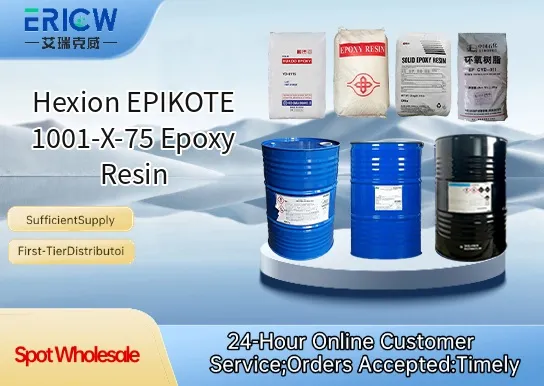
High-purity bisphenol-A based liquid epoxy resin with consistent reactivity and low chloride content.
Optimized viscosity for improved processability in casting, potting, and impregnation applications.
Excellent compatibility with standard amine and anhydride curing agents.
Superior electrical insulation properties and thermal stability after cure.
Reproducible molecular weight distribution ensuring batch-to-batch performance reliability.
Electrical encapsulation and potting of transformers, reactors, and high-voltage insulators.
Castings for busbars, switchgear components, and medium-voltage terminations.
Impregnation of dry-type transformer windings and stator coils.
Formulation of high-performance composites for power transmission infrastructure.
Base resin for flame-retardant epoxy systems meeting UL 94 V-0 and IEC 61241 standards.
| Chemical Type | Bisphenol-A epoxy resin |
| Product Form | Clear to pale yellow liquid |
| Appearance | Homogeneous, transparent liquid at 25°C |
| Epoxy Equivalent Weight (EEW) | 185–192 g/eq |
| Viscosity at 25°C | 12,000–16,000 cP |
| Chloride Content | ≤ 750 ppm |
| Softening Point | Not applicable (liquid at room temperature) |
| Primary Applications | Electrical insulation, casting, potting, impregnation |
Q1: What is the primary functional role of EPIKOTE 1001-X-75 in epoxy formulations?
A: EPIKOTE 1001-X-75 is a liquid bisphenol-A based epoxy resin designed primarily as a reactive diluent and viscosity modifier. It reduces formulation viscosity without significantly compromising crosslink density or thermal performance, enabling improved processability in coatings, adhesives, and composites.
Q2: How does EPIKOTE 1001-X-75 differ from standard solid epoxy resins like EPIKOTE 1001?
A: Unlike the solid grade EPIKOTE 1001, the X-75 variant is a low-viscosity liquid resin with reduced molecular weight and modified epoxy equivalent weight. This imparts enhanced flow characteristics and eliminates the need for elevated temperature handling during blending—making it especially suitable for ambient-cure or heat-sensitive systems.
Q3: Is EPIKOTE 1001-X-75 compatible with common amine and anhydride hardeners?
A: Yes, it demonstrates broad compatibility with aliphatic and cycloaliphatic amines, polyamides, and anhydrides. Reactivity and gel time may vary depending on hardener type and stoichiometry, so optimization through small-scale trials is recommended for critical applications.
Q4: Can EPIKOTE 1001-X-75 be used in high-gloss, UV-stable coating systems?
A: While it provides excellent clarity and initial gloss, EPIKOTE 1001-X-75 is not inherently UV-resistant due to its aromatic backbone. For long-term outdoor exposure, it is typically blended with UV-stabilized resins or protected with topcoats containing HALS and UVA additives.
Contact With Us:
E-mail: wangxingqiang@ericwchem.com
Have a Questions? Call Us:
Add:
Building A1, Jiete Industrial Park, Huangpu District, Guangzhou City, Guangdong Province, China