English
 Español
 tiếng việt
 русский
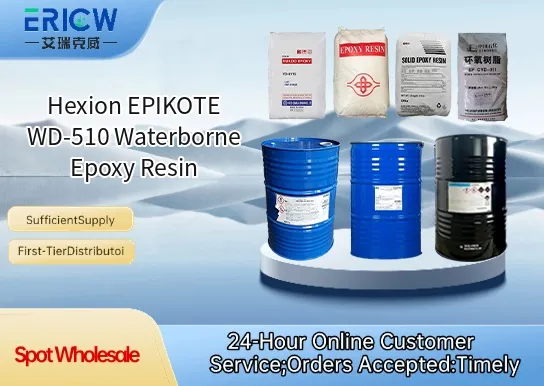
Low-VOC, water-based formulation compliant with stringent global environmental regulations.
Excellent chemical resistance and corrosion protection in cured film form.
Good compatibility with amine-based waterborne curing agents for ambient-cure systems.
Stable dispersion with low viscosity, enabling easy handling and efficient mixing.
Superior adhesion to steel, concrete, and other industrial substrates without primer.
Waterborne epoxy primers for marine and offshore protective coatings.
Industrial maintenance coatings for steel structures and pipelines.
Concrete floor coatings in food processing, pharmaceutical, and cleanroom facilities.
High-performance waterborne two-component (2K) epoxy topcoats and mid-coats.
| Chemical Type | Bisphenol-A based waterborne epoxy dispersion |
| Product Form | Liquid dispersion |
| Appearance | Opaque white to off-white liquid |
| pH (as supplied) | 7.0 – 8.5 |
| Solids Content (wt%) | 48 – 52% |
| Viscosity (mPa·s, Brookfield RVT, #3 spindle, 20 rpm, 25°C) | 1,500 – 3,500 |
| Epoxy Equivalent Weight (EEW) | 480 – 520 g/eq |
| Primary Applications | Protective coatings, industrial maintenance, concrete flooring |
Q1: What is the primary function of EPIKOTE WD-510 in waterborne coating systems?
A: EPIKOTE WD-510 serves as a reactive waterborne epoxy resin component, primarily used to enhance crosslink density, chemical resistance, and adhesion—especially on metal and concrete substrates—within low-VOC, two-component waterborne epoxy coatings and primers.
Q2: How does EPIKOTE WD-510 differ from solvent-based epoxy resins in terms of handling and formulation?
A: Unlike traditional solvent-based epoxies, WD-510 is supplied as a stable aqueous dispersion, eliminating the need for organic solvents during incorporation. It exhibits good compatibility with common waterborne amine hardeners and requires careful pH and shear control during mixing to maintain colloidal stability.
Q3: Can EPIKOTE WD-510 be used in food-contact or potable water applications?
A: EPIKOTE WD-510 is not pre-qualified for direct food-contact or potable water applications. Its suitability for such uses depends on full system validation—including final cured film testing—against relevant regulatory frameworks, and must be confirmed by the formulator through appropriate third-party assessment.
Q4: What are key storage and handling recommendations for this product?
A: Store in original unopened containers at temperatures between 5 °C and 30 °C, away from freezing conditions and direct sunlight. Avoid prolonged exposure to high humidity during handling, and ensure thorough mixing prior to use if sedimentation occurs—gentle mechanical agitation is recommended over high-shear methods.
Contact With Us:
E-mail: wangxingqiang@ericwchem.com
Have a Questions? Call Us:
Add:
Building A1, Jiete Industrial Park, Huangpu District, Guangzhou City, Guangdong Province, China