English
 Español
 tiếng việt
 русский
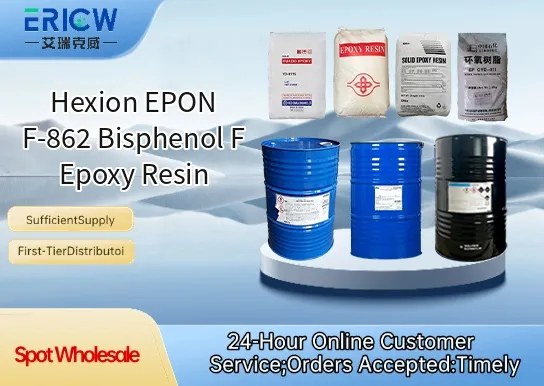
Low viscosity liquid resin enabling excellent wet-out and processability in composites and coatings.
High reactivity with amines and anhydrides, supporting fast cure kinetics and reduced cycle times.
Superior chemical resistance, particularly to acids, alkalis, and solvents, compared to standard Bisphenol A epoxy resins.
Enhanced thermal stability and glass transition temperature (Tg) in cured networks.
Low chlorine content contributing to improved electrical insulation properties and reduced corrosion risk.
High-performance composite matrices for aerospace and wind energy blade manufacturing.
Chemical-resistant tank linings and industrial flooring systems.
Electrical encapsulation and insulating varnishes for transformers and motors.
Adhesives and structural bonding formulations requiring elevated temperature performance.
UV-stable protective coatings for marine and offshore infrastructure.
| Chemical Type | Bisphenol F-based diglycidyl ether epoxy resin |
| Product Form | Clear, low-viscosity liquid |
| Appearance | Pale yellow to water-white, transparent liquid |
| Epoxy Equivalent Weight (EEW) | 170–185 g/eq |
| Viscosity at 25°C | 12,000–16,000 cP |
| Chlorine Content | ≤ 700 ppm |
| Softening Point | Not applicable (liquid at room temperature) |
| Primary Applications | Composites, protective coatings, electrical insulation, high-performance adhesives |
Q1: What are the key advantages of EPON F-862 compared to bisphenol A-based epoxy resins?
A: EPON F-862 offers lower viscosity and higher functionality than standard bisphenol A epoxies, enabling improved wetting of fillers and reinforcements, enhanced crosslink density in cured systems, and better performance in high-solids or solvent-free formulations.
Q2: Is EPON F-862 suitable for use in electrical encapsulation and potting applications?
A: Yes — its low ionic impurity content, good dielectric properties, and ability to achieve high glass transition temperatures after curing make it well-suited for demanding electrical insulation and encapsulation applications, especially where thermal stability and moisture resistance are critical.
Q3: How does EPON F-862 perform in corrosion-resistant coating systems?
A: Due to its higher aromatic content and tighter crosslinked network, EPON F-862 contributes to improved chemical resistance and barrier properties in protective coatings—particularly when combined with appropriate amine or phenalkamine hardeners for industrial and marine environments.
Q4: Can EPON F-862 be blended with other epoxy resins?
A: Yes — it is fully miscible with most liquid and solid bisphenol A epoxies, as well as novolac and cycloaliphatic epoxies, allowing formulators to tailor viscosity, reactivity, and final cure properties without phase separation concerns.
Contact With Us:
E-mail: wangxingqiang@ericwchem.com
Have a Questions? Call Us:
Add:
Building A1, Jiete Industrial Park, Huangpu District, Guangzhou City, Guangdong Province, China