English
 Español
 tiếng việt
 русский
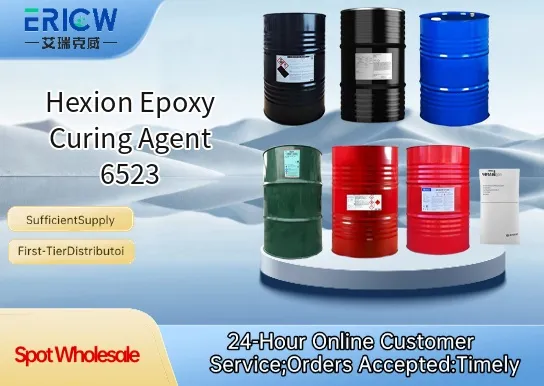
Fast-reacting aliphatic amine-based curing agent for rapid room-temperature cure.
Excellent chemical resistance, particularly to solvents, acids, and alkalis after full cure.
Low viscosity enables easy handling, precise metering, and superior wetting of fillers and reinforcements.
Provides high glass transition temperature (Tg) and superior mechanical strength in cured epoxy systems.
Low volatility and low odor profile support safer industrial processing and improved workplace compliance.
Structural adhesives for aerospace and automotive bonding applications.
High-performance potting and encapsulation compounds for electronics protection.
Industrial flooring and heavy-duty protective coatings.
Composite matrix resins for wind turbine blades and pultruded profiles.
Repair mortars and anchoring systems requiring rapid strength development.
| Chemical Type | Aliphatic polyamine |
| Product Form | Liquid |
| Appearance | Clear, pale yellow liquid |
| Primary Applications | Structural adhesives, potting compounds, protective coatings, composites |
| Key Features | Room-temperature cure, low viscosity, high Tg, chemical resistance |
| Benefits | Reduced cycle times, excellent interfacial adhesion, long pot life at ambient conditions |
| Storage Stability | 12 months in original unopened container at 15–25°C |
Q1: What is the primary chemical class of Hexion Epoxy Curing Agent 6523?
A: Hexion Epoxy Curing Agent 6523 is an amine-functional adduct, specifically designed as a low-viscosity, latency-enhanced curing agent for epoxy resins. It is not a simple aliphatic or aromatic amine, but rather a modified amine system offering improved handling and controlled reactivity.
Q2: Is 6523 suitable for ambient-cure or elevated-temperature-cure applications?
A: 6523 is formulated to provide good ambient-cure performance with reasonable pot life, while also supporting accelerated cure at moderate elevated temperatures (e.g., 60–100 °C). Its latency profile allows for extended working time at room temperature followed by efficient crosslinking upon mild heating.
Q3: How does 6523 compare to traditional DICY-based systems in terms of handling and safety?
A: Unlike dicyandiamide (DICY), which requires micronization and poses dust inhalation concerns, 6523 is supplied as a free-flowing liquid with lower volatility and reduced respiratory hazard potential. It offers easier metering, improved mixing homogeneity, and generally more favorable occupational hygiene characteristics.
Q4: Can 6523 be used in high-performance composites or electrical encapsulation?
A: Yes — 6523 delivers excellent adhesion, low moisture absorption, and good dielectric properties after cure, making it well-suited for structural composites, prepreg matrices, and electrical/electronic encapsulation where thermal stability and long-term reliability are critical.
Q5: What guidance can be provided on formulation dosage?
A: Dosage depends on the specific epoxy resin, desired cure profile, and end-use requirements. Typically, 6523 is used at low concentrations relative to the resin — generally ranging from 0.1% to 2% by weight — and should be optimized through small-scale trials to balance pot life, gel time, and final mechanical performance.
Contact With Us:
E-mail: wangxingqiang@ericwchem.com
Have a Questions? Call Us:
Add:
Building A1, Jiete Industrial Park, Huangpu District, Guangzhou City, Guangdong Province, China