English
 Español
 tiếng việt
 русский
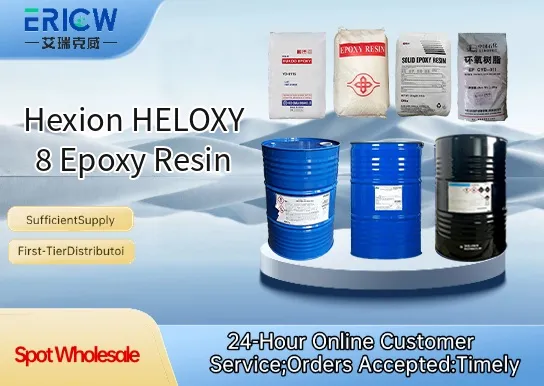
Low-viscosity liquid epoxy resin ideal for easy handling and processing at ambient temperature.
Excellent compatibility with standard amine and anhydride curing agents.
Provides good adhesion to metals, composites, and cured polymer substrates.
Offers balanced mechanical properties including toughness and chemical resistance after cure.
Designed for use in reactive diluent systems to reduce formulation viscosity without significant loss of functionality.
Electrical encapsulation and potting compounds for transformers and electronic components.
High-performance adhesive formulations for aerospace and automotive bonding.
Composite matrix resins for filament-wound pressure vessels and structural laminates.
Coating systems requiring low shrinkage and excellent substrate wetting.
Reactive diluent in high-solids or solvent-free epoxy coatings and flooring systems.
| Chemical Type | Diglycidyl ether of bisphenol-A (DGEBA) derivative |
| Product Form | Clear, low-viscosity liquid |
| Appearance | Colorless to pale yellow, transparent liquid |
| Epoxy Equivalent Weight (EEW) | 175–185 g/eq |
| Viscosity at 25°C | 10–14 Pa·s (10,000–14,000 cP) |
| Chloride Content | < 1,000 ppm |
| Primary Applications | Reactive diluent, adhesive component, composite matrix modifier |
| Key Features | Low volatility, low skin sensitization potential, good hydrolytic stability |
Q1: What is the primary function of HELoxy 8 in epoxy formulations?
A: HELoxy 8 is a reactive diluent designed to reduce viscosity and improve processability of standard bisphenol-A or bisphenol-F based epoxy resins without significantly compromising crosslink density or thermal performance.
Q2: Is HELoxy 8 suitable for high-gloss, low-VOC coating systems?
A: Yes — as a mono-functional reactive diluent with low volatility and no added solvents, HELoxy 8 supports formulators in achieving lower VOC content while maintaining film integrity and surface aesthetics in protective and decorative coatings.
Q3: How does HELoxy 8 compare to non-reactive diluents in terms of final film properties?
A: Unlike non-reactive diluents, HELoxy 8 becomes chemically incorporated into the polymer network during cure, helping retain mechanical strength, chemical resistance, and adhesion — whereas non-reactive types may migrate or volatilize, potentially leading to embrittlement or reduced durability.
Q4: Can HELoxy 8 be used in combination with amine or anhydride hardeners?
A: Yes — HELoxy 8 is compatible with common epoxy curing agents including aliphatic and aromatic amines, as well as cyclic anhydrides, and is typically used at low concentrations to tailor rheology without disrupting cure kinetics or final network formation.
Contact With Us:
E-mail: wangxingqiang@ericwchem.com
Have a Questions? Call Us:
Add:
Building A1, Jiete Industrial Park, Huangpu District, Guangzhou City, Guangdong Province, China