English
 Español
 tiếng việt
 русский
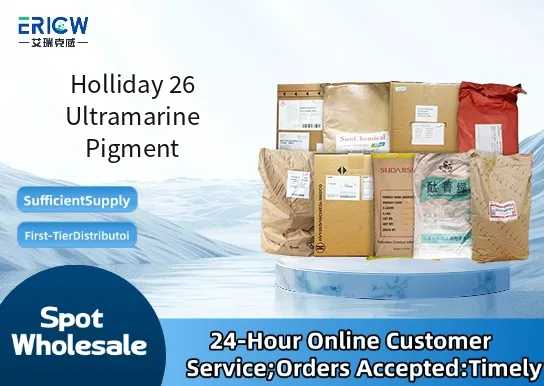
High chroma, intense blue shade with excellent tinting strength.
Outstanding lightfastness and weather resistance for long-term color stability.
Chemically stable in alkaline systems; resistant to sulfur-containing atmospheres.
Low oil absorption ensures efficient dispersion and improved formulation viscosity control.
Non-toxic, sulfate-free composition compliant with major global regulatory frameworks.
Architectural coatings and exterior masonry paints.
Plastic coloration for polyolefins and PVC profiles.
Printing inks for packaging and security applications.
Cosmetic-grade formulations including soap, bath bombs, and dry shampoos.
Artists’ acrylics, gouache, and industrial artist-grade pigments.
| Chemical Type | Sodium aluminosilicate sulfide (synthetic ultramarine) |
| Product Form | Fine, free-flowing powder |
| Appearance | Brilliant blue to violet-blue granular powder |
| Primary Applications | Coatings, plastics, inks, cosmetics, art materials |
| Key Features | Alkali-stable, non-bleeding, low dust, high dispersibility |
| Heat Stability | Up to 120°C (short-term exposure) |
| pH Range Compatibility | 8.5–11.0 (optimal performance) |
| Heavy Metals Content | Compliant with EN 71-3 and ASTM F963 |
Q1: What is the primary chemical composition of Holliday 26 Ultramarine Pigment?
A: Holliday 26 is a synthetic sodium aluminosilicate-based ultramarine pigment, stabilized with sulfur-containing species to achieve its characteristic intense blue hue. It does not contain heavy metals such as lead, cadmium, or chromium, and is classified as non-toxic under standard handling conditions.
Q2: Is Holliday 26 suitable for use in polymer systems exposed to high processing temperatures?
A: Holliday 26 offers good thermal stability up to approximately 200 °C for short-term exposure, making it appropriate for many thermoplastic compounding and extrusion processes. However, prolonged residence at elevated temperatures—especially above 220 °C—or strongly acidic environments may cause partial discoloration due to sulfur oxidation or structural breakdown.
Q3: How does Holliday 26 perform in alkaline versus acidic media?
A: Holliday 26 is highly stable in neutral to alkaline conditions and is commonly used in cementitious, plaster, and soap formulations. It is not recommended for strongly acidic applications (pH < 5), where protonation can lead to irreversible fading or greening due to disruption of the polysulfide chromophore system.
Q4: Can Holliday 26 be used in food-contact plastics or cosmetics?
A: Holliday 26 is not certified for direct food-contact or cosmetic applications under current global regulatory frameworks. While it meets general industrial safety requirements, it has not undergone full toxicological assessment or listing under FDA 21 CFR, EU Cosmetics Regulation, or similar directives for those end uses.
Contact With Us:
E-mail: wangxingqiang@ericwchem.com
Have a Questions? Call Us:
Add:
Building A1, Jiete Industrial Park, Huangpu District, Guangzhou City, Guangdong Province, China