English
 Español
 tiếng việt
 русский
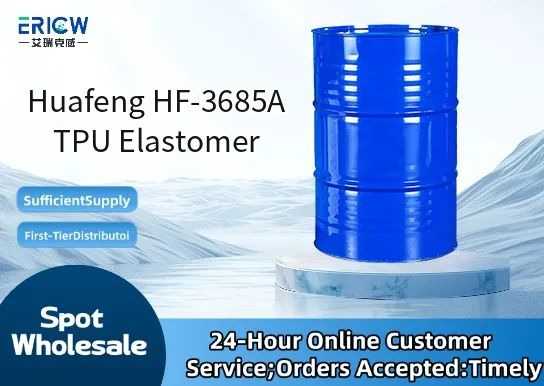
Excellent abrasion resistance for demanding mechanical environments.
Good low-temperature flexibility down to –30 °C.
High transparency and clarity suitable for aesthetic applications.
Outstanding oil and grease resistance compared to conventional elastomers.
Easy processability via extrusion, injection molding, and calendering.
Transparent protective films for electronics and displays.
Flexible medical tubing requiring biocompatibility support.
High-performance seals and gaskets in automotive subsystems.
Wear-resistant components for industrial rollers and conveyor belts.
Soft-touch overmolding for consumer electronics housings.
| Chemical Type | Aliphatic polyester-based thermoplastic polyurethane |
| Product Form | Pellets |
| Appearance | Translucent, free-flowing granules |
| Hardness (Shore A) | 85 ± 2 |
| Melt Flow Index (210 °C/2.16 kg) | 12–16 g/10 min |
| Density | 1.18–1.20 g/cm³ |
| Key Features | UV-stable, hydrolysis-resistant, non-yellowing |
| Compliance | RoHS compliant; meets ISO 10993-5 cytotoxicity screening |
Q1: What are the key processing advantages of HF-3685A compared to conventional TPU grades?
A: HF-3685A offers enhanced melt flow stability and reduced torque demand during extrusion and injection molding, enabling smoother processing at lower barrel temperatures and shorter cycle times—particularly beneficial for thin-wall and high-precision thermoplastic elastomer parts.
Q2: Is HF-3685A suitable for overmolding onto rigid substrates like ABS or PC?
A: Yes—HF-3685A demonstrates strong interfacial adhesion to common engineering thermoplastics when processed under optimized temperature and dwell time conditions. Bond strength is further enhanced with proper mold surface preparation and compatible thermal profiles.
Q3: How does HF-3685A perform in dynamic mechanical applications requiring repeated flexing or impact resistance?
A: Thanks to its balanced hard-segment dispersion and tailored soft-segment architecture, HF-3685A delivers excellent resilience, low permanent set after cyclic deformation, and consistent impact absorption across a broad service temperature range.
Q4: Can HF-3685A be blended with other thermoplastics or fillers without compromising elasticity?
A: HF-3685A shows good compatibility with selected polyolefins and functional fillers (e.g., silica, carbon black) when compounded using standard twin-screw extrusion. However, compatibility with polar polymers such as PET or PA requires careful evaluation of interfacial adhesion and phase morphology.
Contact With Us:
E-mail: wangxingqiang@ericwchem.com
Have a Questions? Call Us:
Add:
Building A1, Jiete Industrial Park, Huangpu District, Guangzhou City, Guangdong Province, China