English
 Español
 tiếng việt
 русский
Excellent abrasion resistance for extended service life in dynamic applications.
Outstanding low-temperature flexibility down to –30 °C without significant loss of elasticity.
Good oil, grease, and hydrocarbon resistance suitable for industrial environments.
High tensile strength and elongation at break enabling robust performance under mechanical stress.
Easy processability via extrusion, injection molding, and calendering with minimal thermal degradation.
Industrial rollers and conveyor belts requiring wear-resistant surface layers.
Automotive trim components including weather seals and interior soft-touch parts.
Flexible hoses and fluid transfer tubing for pneumatic and hydraulic systems.
Footwear midsoles and outsoles demanding rebound resilience and durability.
Protective coatings and overmolding for electronic enclosures and tool handles.
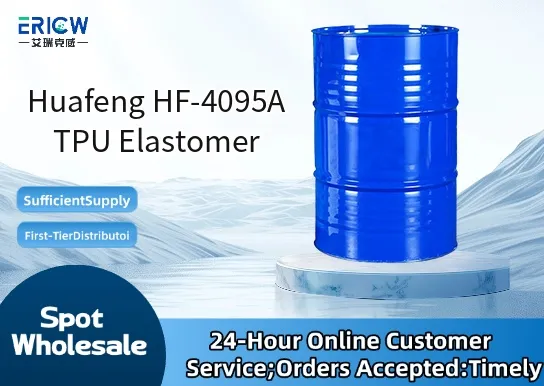
| Chemical Type | Thermoplastic Polyurethane (TPU), polyester-based |
| Product Form | Pellets |
| Appearance | Off-white to light amber translucent granules |
| Hardness (Shore A) | 95 ± 2 |
| Density (g/cm³) | 1.20–1.23 |
| Melt Flow Index (210 °C/5 kg) | 8–12 g/10 min |
| Tensile Strength (MPa) | ≥ 45 |
| Elongation at Break (%) | ≥ 480 |
Q1: What are the key processing advantages of HF-4095A compared to conventional TPU grades?
A: HF-4095A offers enhanced melt flow stability and reduced torque demand during extrusion and injection molding, enabling smoother processing at lower temperatures and shorter cycle times—particularly beneficial for thin-walled or highly detailed parts.
Q2: Is HF-4095A suitable for applications requiring abrasion resistance and flexibility at low temperatures?
A: Yes. As a polyester-based TPU elastomer, HF-4095A delivers excellent balance between mechanical toughness and low-temperature flexibility, making it well-suited for dynamic applications such as automotive trim, industrial hoses, and wearable components exposed to varying thermal conditions.
Q3: Can HF-4095A be blended with other thermoplastics or elastomers?
A: HF-4095A demonstrates good compatibility with common engineering thermoplastics such as PC, ABS, and certain polyesters when used in alloy formulations—though phase morphology and final properties depend on processing parameters and additive selection. Compatibility testing is recommended for critical applications.
Q4: How should HF-4095A be dried prior to processing?
A: Like most hygroscopic TPUs, HF-4095A must be thoroughly dried before melt processing. A standard recommendation is drying at 80–90 °C for 3–4 hours using desiccant-assisted equipment, with moisture content maintained below 0.05% to prevent hydrolysis and surface defects.
Contact With Us:
E-mail: wangxingqiang@ericwchem.com
Have a Questions? Call Us:
Add:
Building A1, Jiete Industrial Park, Huangpu District, Guangzhou City, Guangdong Province, China