English
 Español
 tiếng việt
 русский
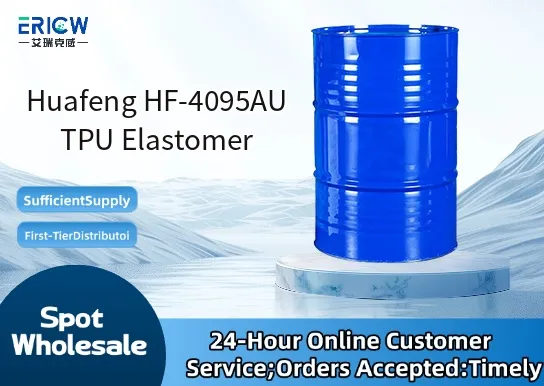
Excellent abrasion resistance for extended service life in demanding mechanical environments.
Outstanding oil and grease resistance, maintaining performance in lubricated or contaminated conditions.
High tensile strength and elongation at break, enabling robust dynamic flexibility without premature failure.
Good low-temperature flexibility down to –30 °C, ensuring reliable functionality in cold-climate applications.
Excellent processability via extrusion, injection molding, and calendering—compatible with standard thermoplastic equipment.
Industrial rollers and conveyor belts requiring high wear resistance and dimensional stability.
Automotive trim components, including door seals, dust caps, and under-hood grommets.
Flexible hoses and tubing for pneumatic and hydraulic systems operating under moderate pressure.
Protective sheathing for cables and wires exposed to mechanical stress and environmental exposure.
Footwear midsoles and outsoles where rebound resilience and slip resistance are critical.
| Chemical Type | Aliphatic polyester-based thermoplastic polyurethane (TPU) |
| Product Form | Pellets (free-flowing, uniform size) |
| Appearance | Off-white to light amber translucent granules |
| Primary Applications | Extruded profiles, molded parts, coated fabrics, and flexible industrial components |
| Key Features | Oil resistance, abrasion resistance, low-temperature flexibility, melt-processable |
| Benefits | Reduced maintenance frequency, extended part lifetime, compatibility with existing TPU processing lines |
| Density (g/cm³) | 1.18–1.22 |
| Melt Flow Index (230 °C/2.16 kg, g/10 min) | 10–14 |
Q1: What are the key processing advantages of HF-4095AU compared to conventional TPU grades?
A: HF-4095AU is engineered for enhanced melt stability and reduced viscosity at processing temperatures, enabling smoother extrusion and injection molding—especially in thin-walled or highly detailed parts. Its balanced hardness and flow characteristics support consistent output with lower torque demand and reduced risk of gel formation.
Q2: Is HF-4095AU suitable for overmolding onto rigid substrates like ABS or PC?
A: Yes—HF-4095AU demonstrates strong interfacial adhesion to common engineering thermoplastics when processed under optimized temperature and mold conditions. Surface preparation and thermal compatibility between the substrate and TPU are critical; typical bonding performance is achieved without primers in well-controlled production environments.
Q3: How does HF-4095AU perform under repeated flexing and low-temperature exposure?
A: HF-4095AU retains excellent elasticity and crack resistance down to approximately −30 °C and maintains structural integrity after extended dynamic flexing cycles. Its aliphatic polyether backbone contributes to superior hydrolytic stability and long-term flexibility retention in demanding mechanical applications.
Q4: Can HF-4095AU be used in applications requiring skin contact or medical device components?
A: HF-4095AU is formulated without plasticizers, heavy metals, or known sensitizing additives. While it meets general requirements for biocompatibility-relevant raw materials, final regulatory compliance—including ISO 10993 evaluation or USP Class VI testing—depends on full device design, processing history, and end-use validation by the manufacturer.
Contact With Us:
E-mail: wangxingqiang@ericwchem.com
Have a Questions? Call Us:
Add:
Building A1, Jiete Industrial Park, Huangpu District, Guangzhou City, Guangdong Province, China