English
 Español
 tiếng việt
 русский
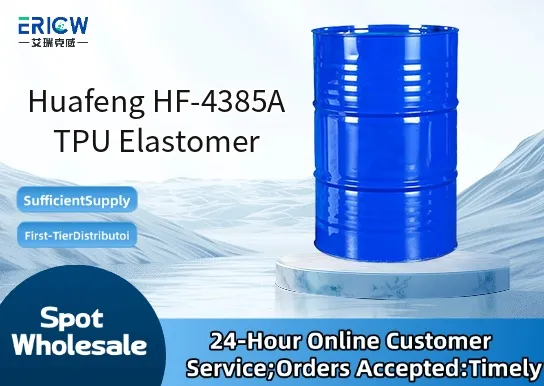
Excellent abrasion resistance for demanding mechanical environments.
Superior oil and grease resistance, maintaining integrity in lubricated conditions.
Good low-temperature flexibility down to –30 °C without significant stiffness increase.
High transparency and excellent clarity suitable for optical-grade applications.
Outstanding melt processability with stable viscosity during extrusion and injection molding.
Transparent medical tubing and fluid delivery systems.
High-clarity protective films for electronic displays and touch panels.
Wear-resistant seals and gaskets in automotive fluid handling components.
Flexible, transparent grips and overmolded handles for consumer electronics.
Specialty extruded profiles requiring optical clarity and dimensional stability.
| Chemical Type | Aliphatic polyester-based thermoplastic polyurethane |
| Product Form | Pellets |
| Appearance | Transparent, colorless granules |
| Density (g/cm³) | 1.18–1.22 |
| Melt Flow Index (210 °C/5 kg, g/10 min) | 10–14 |
| Shore A Hardness | 85 ± 2 |
| Ultimate Tensile Strength (MPa) | 32–36 |
| Primary Applications | Medical devices, optical films, precision extrusions, transparent overmolding |
Q1: What are the key processing methods suitable for HF-4385A?
A: HF-4385A is designed for melt-processing techniques including extrusion, injection molding, and blow molding. It exhibits good melt stability and low viscosity at typical processing temperatures, enabling efficient shaping without excessive thermal degradation.
Q2: How does HF-4385A perform in applications requiring abrasion resistance and flexibility?
A: As a polyester-based TPU elastomer, HF-4385A delivers excellent balance between mechanical toughness and elastic recovery. It shows superior resistance to wear, cut propagation, and repeated flexing—making it well-suited for demanding applications such as high-performance cables, industrial hoses, and dynamic automotive components.
Q3: Is HF-4385A compatible with common plastic substrates for co-extrusion or overmolding?
A: Yes, HF-4385A demonstrates good interfacial adhesion with engineering thermoplastics such as ABS, PC, and PP when processed under optimized temperature and residence time conditions. Bond strength may be further enhanced through surface pretreatment or use of compatible tie layers.
Q4: Does HF-4385A require drying before processing?
A: Yes—like most hygroscopic TPU grades, HF-4385A should be thoroughly dried prior to melt processing. Recommended drying conditions are typically 80–90 °C for 2–4 hours using a desiccant dryer to minimize moisture-related defects such as splay, voids, or reduced mechanical performance.
Contact With Us:
E-mail: wangxingqiang@ericwchem.com
Have a Questions? Call Us:
Add:
Building A1, Jiete Industrial Park, Huangpu District, Guangzhou City, Guangdong Province, China