English
 Español
 tiếng việt
 русский
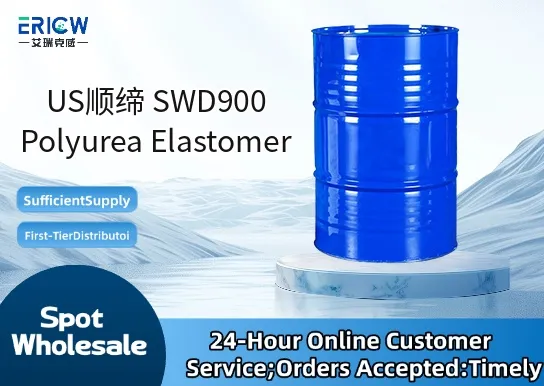
Ultra-fast gel time (≤ 5 seconds) enabling high-throughput, seamless spray application.
Exceptional chemical resistance to hydrocarbons, acids, alkalis, and salt solutions.
Outstanding abrasion and impact resistance with elongation >300% and tensile strength >18 MPa.
100% solids, zero VOCs, and isocyanate-free formulation for safer handling and environmental compliance.
Wide service temperature range from –40 °C to +120 °C without loss of elasticity or adhesion.
Secondary containment linings for chemical storage tanks and bunds.
Roofing and waterproofing membranes for industrial and commercial buildings.
Bedliners and protective coatings for heavy-duty truck beds and mining equipment.
Concrete rehabilitation and corrosion protection for bridges, tunnels, and wastewater infrastructure.
Marine splash zone protection on offshore platforms and harbor structures.
| Chemical Type | Aromatic polyurea elastomer |
| Product Form | Two-component liquid system (A-side: resin blend; B-side: amine-terminated curative) |
| Appearance | A-side: amber viscous liquid; B-side: pale yellow low-viscosity liquid |
| Mix Ratio (by volume) | 1:1 |
| Gel Time (25 °C) | ≤ 5 seconds |
| Cure Time to Handle (25 °C) | ≈ 10 minutes |
| Density (25 °C) | 1.08–1.12 g/cm³ |
| VOC Content | 0 g/L (certified) |
Q1: What are the primary advantages of SWD900 over conventional polyurethane or epoxy coatings?
A: SWD900 offers significantly faster cure times—even at low temperatures and high humidity—along with superior abrasion resistance, elongation, and chemical resilience. Unlike epoxies, it does not require moisture-cure activation, and unlike many polyurethanes, it exhibits minimal sensitivity to amine blush or substrate moisture during application.
Q2: Can SWD900 be applied over concrete, metal, and aged polyurea substrates?
A: Yes—SWD900 adheres well to properly prepared concrete, carbon steel, stainless steel, aluminum, and most cured polyurea or polyurethane surfaces. Surface profiling (e.g., abrasive blasting or mechanical grinding) and thorough cleaning are essential prerequisites for optimal bond strength and long-term performance.
Q3: Is SWD900 suitable for immersion service or continuous exposure to hydrocarbons?
A: SWD900 demonstrates excellent resistance to intermittent hydrocarbon exposure and is widely used in secondary containment linings. For prolonged immersion or aggressive solvent environments, performance validation under site-specific conditions—including temperature, concentration, and duration—is strongly recommended prior to full-scale implementation.
Q4: What surface preparation and ambient conditions are critical for successful SWD900 application?
A: Substrate temperature must remain at least 3°C above dew point, with relative humidity typically below 85%. Concrete should achieve ≤4% moisture content (by ASTM F2170), and all surfaces must be free of oil, grease, laitance, and loose particles. Application is feasible between 5°C and 40°C, though lower temperatures may extend pot life and reduce re-coat windows.
Contact With Us:
E-mail: wangxingqiang@ericwchem.com
Have a Questions? Call Us:
Add:
Building A1, Jiete Industrial Park, Huangpu District, Guangzhou City, Guangdong Province, China