English
 Español
 tiếng việt
 русский
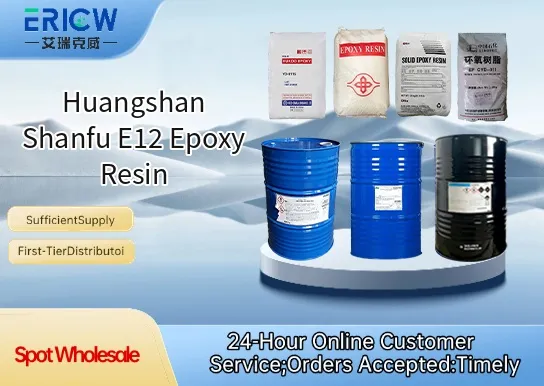
High epoxy equivalent weight (EEW) of approximately 1850–1950 g/eq, enabling controlled crosslink density and enhanced flexibility in cured systems.
Excellent compatibility with standard amine and anhydride curing agents, supporting broad formulation versatility.
Low viscosity at ambient temperature (~12,000–15,000 cP at 25°C), facilitating easy handling, mixing, and impregnation in processing.
Superior hydrolytic stability and moisture resistance, ensuring long-term performance in humid or outdoor environments.
Consistent batch-to-batch quality with strict ISO 9001-compliant manufacturing and rigorous raw material traceability.
Electrical insulation coatings for transformers, reactors, and high-voltage bushings.
Structural adhesives in wind turbine blade assembly and automotive composite bonding.
Matrix resin for filament-wound pressure vessels and fiber-reinforced polymer (FRP) tanks.
Encapsulants and potting compounds for power electronics and LED modules.
Marine-grade protective coatings for offshore platforms and ship hulls.
| Chemical Type | Bisphenol-A based liquid epoxy resin |
| Product Form | Clear to pale yellow viscous liquid |
| Appearance | Transparent, slightly yellow, free from gel particles or sediment |
| Epoxy Equivalent Weight (EEW) | 1850–1950 g/eq |
| Viscosity (25°C) | 12,000–15,000 cP |
| Chlorine Content | ≤ 800 ppm |
| Volatile Content | ≤ 0.3 wt% |
| Storage Stability | 12 months at ≤ 25°C in sealed containers |
Q1: What is the typical application scope of Huangshan Shanfu E12 Epoxy Resin?
A: E12 is a bisphenol-A based liquid epoxy resin widely used in protective coatings, electrical encapsulation, adhesives, and composite matrix systems where balanced reactivity, mechanical strength, and chemical resistance are required.
Q2: How does E12 compare to higher-epoxy-equivalent-weight resins like E20 or E44?
A: E12 has a lower molecular weight and higher epoxide equivalent weight (EEW) than standard E44, offering improved flexibility and reduced viscosity — making it suitable for formulations requiring better flow and deeper penetration without excessive diluent addition.
Q3: Is E12 compatible with common amine and anhydride curing agents?
A: Yes, E12 demonstrates broad compatibility with aliphatic and cycloaliphatic amines, as well as aromatic amines and acid anhydrides, enabling versatile cure profiles across ambient, elevated, and post-cure temperature conditions.
Q4: Can E12 be used in food-contact or potable water applications?
A: While E12 itself is not pre-approved for direct food contact, it may be incorporated into finished formulations that comply with relevant regional regulatory requirements — final suitability must be verified through full system testing and regulatory assessment by the end-user.
Contact With Us:
E-mail: wangxingqiang@ericwchem.com
Have a Questions? Call Us:
Add:
Building A1, Jiete Industrial Park, Huangpu District, Guangzhou City, Guangdong Province, China