English
 Español
 tiếng việt
 русский
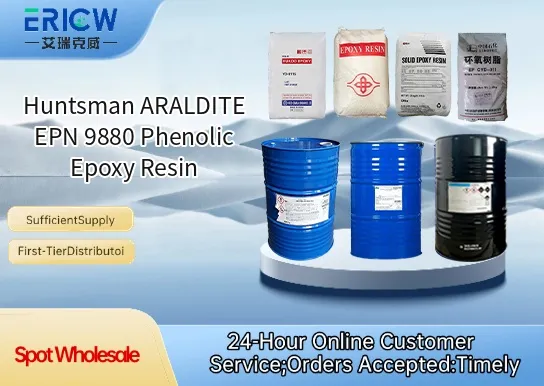
High thermal stability and excellent char yield for demanding fire-resistant applications.
Superior chemical resistance, particularly to strong acids, alkalis, and solvents.
Low viscosity in molten state, enabling efficient processing via casting, filament winding, or injection molding.
High functionality (average epoxy equivalent weight ~185–195 g/eq) for dense crosslinking and enhanced mechanical performance.
Compatible with conventional phenolic hardeners and latent catalysts for extended pot life and controlled cure profiles.
Aerospace composite matrices requiring flame, smoke, and toxicity (FST) compliance.
Electrical insulation systems for high-voltage switchgear and transformer components.
High-performance printed circuit board (PCB) laminates and prepregs.
Structural adhesives for metal-to-metal bonding in transportation and industrial equipment.
Carbon fiber-reinforced tooling resins for autoclave-cured molds and mandrels.
| Chemical Type | Phenolic epoxy resin (novolac-type) |
| Product Form | Pale yellow to amber solid flakes |
| Appearance | Free-flowing crystalline flakes |
| Epoxy Equivalent Weight (EEW) | 185–195 g/eq |
| Softening Point | 85–92 °C (ASTM D36) |
| Color (Gardner Scale) | ≤ 4 |
| Volatile Content | ≤ 0.5 wt% (120 °C, 2 h) |
| Primary Applications | High-temperature composites, electrical laminates, fire-retardant structural materials |
Q1: What distinguishes ARALDITE EPN 9880 from standard bisphenol-A epoxy resins?
A: ARALDITE EPN 9880 is a phenolic novolac-based epoxy resin, offering significantly higher functionality and aromatic density than conventional bisphenol-A epoxies. This structure delivers enhanced thermal stability, superior chemical resistance—particularly to strong acids and solvents—and improved char yield upon thermal decomposition.
Q2: Is ARALDITE EPN 9880 suitable for high-temperature composite applications, such as aerospace tooling or engine components?
A: Yes—its high glass transition temperature (Tg) after full cure and excellent thermo-oxidative stability make it well-suited for demanding structural composites and tooling matrices where continuous service above 150 °C is required. It is commonly selected when elevated thermal performance and dimensional retention under thermal cycling are critical.
Q3: How is ARALDITE EPN 9880 typically cured, and what types of hardeners are recommended?
A: It is most commonly cured with aromatic amines (e.g., DDS, DDM) or high-performance anhydrides, often requiring elevated temperature post-cures to achieve optimal crosslink density. Catalysts such as tertiary amines or imidazoles may be used to moderate reactivity, especially in prepreg or infusion formulations.
Q4: Can ARALDITE EPN 9880 be blended with other epoxy resins to modify performance?
A: Yes—it is frequently blended with lower-functionality epoxies (e.g., DGEBA or cycloaliphatic resins) to balance processability, toughness, and thermal performance. Blending allows formulators to tailor viscosity, gel time, and final Tg while retaining the core advantages of the phenolic novolac backbone.
Contact With Us:
E-mail: wangxingqiang@ericwchem.com
Have a Questions? Call Us:
Add:
Building A1, Jiete Industrial Park, Huangpu District, Guangzhou City, Guangdong Province, China