English
 Español
 tiếng việt
 русский
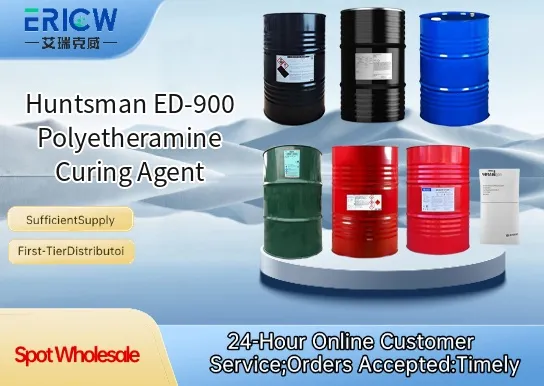
Low-viscosity liquid enabling excellent processability and easy handling in epoxy formulations.
Fast-reacting polyetheramine chemistry delivering rapid cure at ambient and elevated temperatures.
Provides outstanding flexibility, impact resistance, and toughness in cured epoxy systems.
Excellent compatibility with standard diglycidyl ether of bisphenol-A (DGEBA) and novolac epoxies.
Low volatility and low odor profile supporting safer industrial handling and improved workplace environment.
High-performance structural adhesives for aerospace and transportation bonding.
Industrial flooring systems requiring rapid return-to-service and chemical resistance.
Composite matrix resins for wind turbine blades and lightweight automotive parts.
Epoxy grouts and mortars used in infrastructure repair and concrete rehabilitation.
Electrical encapsulation and potting compounds demanding low exotherm and dimensional stability.
| Chemical Type | Polyetheramine (tertiary amine-terminated) |
| Product Form | Clear, low-viscosity liquid |
| Appearance | Colorless to pale yellow, transparent |
| Amine Value | 220–240 mg KOH/g |
| Viscosity (25°C) | 150–250 cP |
| Specific Gravity (25°C) | 0.95–0.98 g/cm³ |
| Reactivity Profile | Fast-curing at room temperature; accelerated at 60–80°C |
| Primary Applications | Epoxy adhesive, coating, composite, and grout formulations |
Q1: What is the primary function of ED-900 in epoxy formulations?
A: ED-900 is a polyetheramine-based curing agent designed to react with epoxy resins, enabling crosslinking at ambient or elevated temperatures. It imparts flexibility, low viscosity, and excellent moisture resistance to the cured network, making it particularly suitable for coatings, adhesives, and composite matrices requiring toughness and durability.
Q2: How does ED-900 compare to conventional aliphatic amines in terms of pot life and cure speed?
A: Compared to fast-reacting aliphatic amines, ED-900 offers extended pot life and more controllable reactivity due to its polyether backbone and steric hindrance. It typically provides workable mixing windows of several hours at room temperature, while still achieving practical handling strength within 24–48 hours—ideal for large-scale or field-applied systems where processing time is critical.
Q3: Is ED-900 compatible with standard epoxy resins such as DGEBA and novolacs?
A: Yes, ED-900 demonstrates broad compatibility with common liquid and solid bisphenol-A (DGEBA), bisphenol-F, and novolac epoxy resins. Its low viscosity and flexible molecular structure support homogeneous blending without excessive heating or high-shear mixing, facilitating ease of formulation across diverse resin types.
Q4: What are typical handling and storage recommendations for ED-900?
A: ED-900 should be stored in tightly sealed containers under dry, cool conditions (preferably below 30°C) and protected from moisture and prolonged exposure to air, as polyetheramines can absorb atmospheric water over time. Standard industrial PPE—including gloves, goggles, and ventilation—is recommended during handling to minimize skin and respiratory contact.
Contact With Us:
E-mail: wangxingqiang@ericwchem.com
Have a Questions? Call Us:
Add:
Building A1, Jiete Industrial Park, Huangpu District, Guangzhou City, Guangdong Province, China