English
 Español
 tiếng việt
 русский
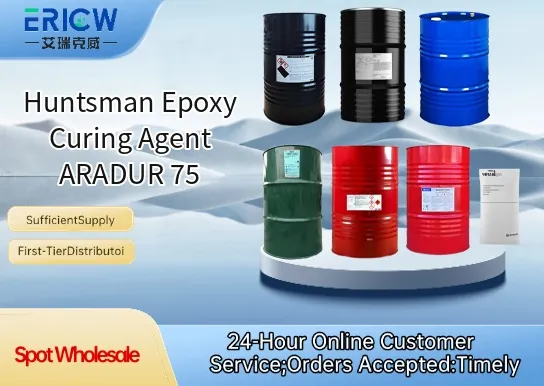
Fast-reacting aromatic amine-based curing agent for room-temperature and elevated-temperature epoxy systems.
Delivers excellent mechanical strength, thermal stability, and chemical resistance in cured epoxy networks.
Offers low viscosity and good compatibility with standard liquid and solid epoxy resins.
Enables short gel times and rapid development of handling strength—ideal for high-throughput manufacturing.
Provides superior adhesion to metals, composites, and concrete substrates.
Aerospace composite bonding and repair adhesives.
Industrial flooring and heavy-duty protective coatings.
Electrical encapsulation and potting compounds for power electronics.
Structural adhesive formulations for automotive and rail components.
Wind turbine blade bonding and tooling resins.
| Chemical Type | Aromatic amine adduct |
| Product Form | Liquid |
| Appearance | Amber to light brown transparent liquid |
| Primary Applications | Structural adhesives, high-performance coatings, composites bonding |
| Key Features | Room-temperature cure capability, low exotherm, high Tg potential |
| Benefits | Improved productivity, reduced energy consumption, enhanced durability |
| Storage Stability | 12 months unopened at 15–25°C |
| Handling Precautions | Use in well-ventilated areas; wear appropriate PPE (gloves, goggles, respirator) |
Q1: What is the primary chemical class of ARADUR 75?
A: ARADUR 75 is a latent amine-based curing agent, specifically formulated as a modified aromatic diamine adduct designed for controlled reactivity in epoxy systems.
Q2: At what temperature range is ARADUR 75 typically activated for full cure?
A: ARADUR 75 exhibits latent behavior at ambient temperatures and is generally activated during thermal post-cure, with effective crosslinking occurring between 120 °C and 180 °C depending on formulation and desired performance profile.
Q3: How does ARADUR 75 compare to traditional DICY-based hardeners in terms of pot life and handling safety?
A: Compared to dicyandiamide (DICY), ARADUR 75 offers improved handling safety due to its non-dusty, low-volatility liquid or semi-solid form, and provides longer ambient-temperature pot life while maintaining good shelf stability in formulated one-component systems.
Q4: Is ARADUR 75 compatible with standard diglycidyl ether of bisphenol-A (DGEBA) resins?
A: Yes, ARADUR 75 is widely used with conventional DGEBA and other standard epoxy resins, including novolac epoxies, and delivers balanced mechanical properties, thermal resistance, and chemical resistance in the cured network.
Q5: What is the typical dosage range when using ARADUR 75 in epoxy formulations?
A: Dosage depends on the specific resin system and target performance, but ARADUR 75 is typically used at low concentrations relative to resin weight—generally ranging from 0.1% to 2% by weight for latent one-component applications.
Contact With Us:
E-mail: wangxingqiang@ericwchem.com
Have a Questions? Call Us:
Add:
Building A1, Jiete Industrial Park, Huangpu District, Guangzhou City, Guangdong Province, China