English
 Español
 tiếng việt
 русский
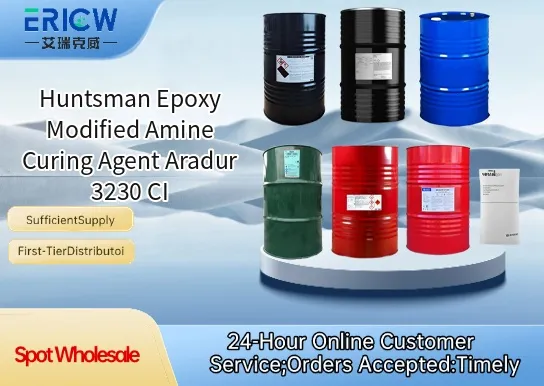
Low-viscosity liquid enabling excellent mixing and processing with standard epoxy resins.
Fast-reacting at ambient temperature, supporting rapid cure development without forced heat.
Provides outstanding adhesion to metals, concrete, and composite substrates.
Delivers high mechanical strength and chemical resistance in cured epoxy systems.
Compatible with bisphenol-A and bisphenol-F epoxy resins for broad formulation flexibility.
Structural adhesives for automotive and aerospace bonding.
High-performance industrial flooring and protective coatings.
Electrical encapsulation and potting compounds.
Repair mortars and grouts for concrete infrastructure.
Composite matrix resins for wind turbine blade manufacturing.
| Chemical Type | Epoxy-modified aliphatic amine |
| Product Form | Liquid |
| Appearance | Clear to slightly amber, low-viscosity liquid |
| Primary Applications | Structural adhesives, industrial coatings, composites, repair mortars |
| Key Features | Ambient-cure capability, low viscosity, high reactivity, excellent adhesion |
| Benefits | Reduced energy consumption, improved process efficiency, enhanced durability |
| Storage Conditions | Store in original sealed container at 15–25 °C; protect from moisture |
| Shelf Life | 12 months from date of manufacture under recommended storage conditions |
Q1: What is the primary function of Aradur 3230 CI in epoxy systems?
A: Aradur 3230 CI is an epoxy-modified amine curing agent designed to provide enhanced compatibility, reduced volatility, and improved flexibility in cured epoxy networks—particularly beneficial for coatings, adhesives, and composite matrices requiring balanced reactivity and toughness.
Q2: How does Aradur 3230 CI differ from conventional aliphatic amines?
A: Unlike standard aliphatic amines, Aradur 3230 CI features covalently bound epoxy segments that lower vapor pressure, improve resin compatibility, and moderate cure speed—resulting in reduced blush tendency, better pot life control, and improved intercoat adhesion in multi-layer applications.
Q3: Is Aradur 3230 CI suitable for low-VOC or high-solids formulations?
A: Yes—its low volatility and high active hydrogen equivalent weight make it well-suited for low-VOC, high-solids, and solvent-free epoxy systems, supporting compliance with evolving environmental and occupational health requirements without compromising film formation or mechanical performance.
Q4: What types of epoxy resins is Aradur 3230 CI typically compatible with?
A: It demonstrates broad compatibility with standard liquid and solid bisphenol-A/F epoxy resins, novolac epoxies, and cycloaliphatic epoxies—enabling formulation flexibility across protective coatings, electrical encapsulants, and structural composites.
Q5: How should Aradur 3230 CI be handled and stored to maintain stability?
A: Store in tightly sealed containers under dry, cool conditions (typically below 30 °C) and protect from moisture and prolonged exposure to air; pre-use mixing may be required if phase separation occurs during extended storage, and material should be used within recommended shelf-life guidelines to ensure consistent reactivity.
Contact With Us:
E-mail: wangxingqiang@ericwchem.com
Have a Questions? Call Us:
Add:
Building A1, Jiete Industrial Park, Huangpu District, Guangzhou City, Guangdong Province, China