English
 Español
 tiếng việt
 русский
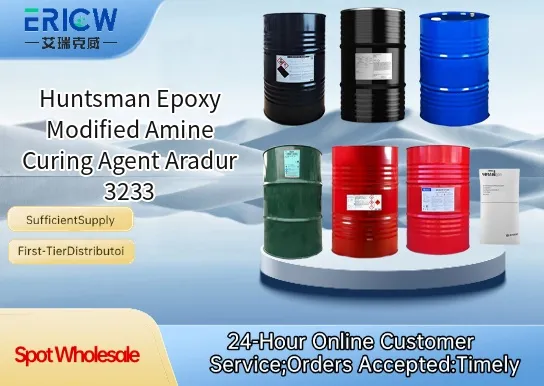
Low-viscosity liquid formulation enabling easy handling and efficient mixing with epoxy resins.
Extended pot life at ambient temperature for improved processing window in large-scale applications.
Excellent adhesion to metallic and concrete substrates without requiring surface priming.
Good chemical resistance, particularly against alkalis, solvents, and mild acids after full cure.
Reduced exotherm during curing, minimizing thermal stress and distortion in thick-section castings.
High-performance industrial flooring systems for warehouses and manufacturing facilities.
Chemical-resistant tank linings and secondary containment structures.
Structural adhesive formulations for metal-to-metal and composite bonding.
Electrical encapsulation and potting compounds requiring low shrinkage and high dielectric strength.
| Chemical Type | Epoxy-modified polyamine |
| Product Form | Clear to pale yellow liquid |
| Appearance | Homogeneous, free of sediment or haze |
| Density (25°C) | 1.02–1.05 g/cm³ |
| Viscosity (25°C) | 250–450 mPa·s |
| Amine Hydrogen Equivalent Weight (AHEW) | 185–195 g/eq |
| Primary Applications | Industrial flooring, corrosion protection, structural adhesives |
| Key Features | Low viscosity, extended pot life, low exotherm, excellent adhesion |
Q1: What is the primary function of Aradur 3233 in epoxy systems?
A: Aradur 3233 is an epoxy-modified amine curing agent designed to provide enhanced flexibility, improved adhesion to challenging substrates, and reduced sensitivity to moisture during cure—making it especially suitable for demanding industrial coatings and composite applications.
Q2: How does Aradur 3233 compare to conventional aliphatic amines in terms of pot life and reactivity?
A: Compared to standard aliphatic amines, Aradur 3233 offers extended pot life and more controlled reactivity at ambient temperatures, allowing greater processing window for application methods such as spray coating or filament winding without premature gelation.
Q3: Is Aradur 3233 compatible with standard bisphenol-A and bisphenol-F epoxy resins?
A: Yes, Aradur 3233 demonstrates broad compatibility with common liquid and solid epoxy resins, including bisphenol-A and bisphenol-F types, and is frequently used in high-performance protective coatings and structural adhesives formulations.
Q4: What are typical handling and storage recommendations for this curing agent?
A: Aradur 3233 should be stored in tightly sealed containers under dry conditions, protected from moisture and elevated temperatures. It is recommended to use within 12 months of manufacture when stored properly, and users should observe standard industrial hygiene practices during handling.
Contact With Us:
E-mail: wangxingqiang@ericwchem.com
Have a Questions? Call Us:
Add:
Building A1, Jiete Industrial Park, Huangpu District, Guangzhou City, Guangdong Province, China