English
 Español
 tiếng việt
 русский
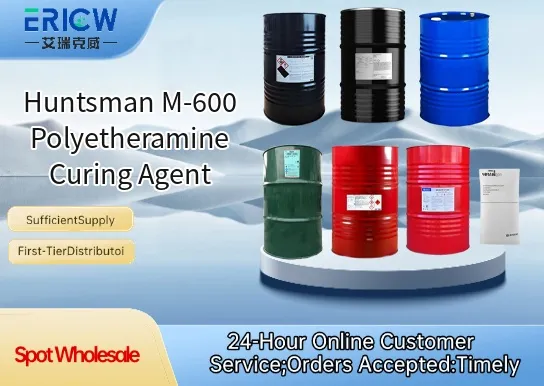
Low-viscosity liquid enabling easy handling and efficient mixing with epoxy resins.
Offers extended pot life at ambient temperatures while delivering rapid cure kinetics upon heating.
Provides excellent flexibility, impact resistance, and low-temperature toughness in cured epoxy systems.
Delivers superior adhesion to metals, composites, and concrete substrates.
Low volatility and minimal amine blush formation support high-gloss, defect-free surface finishes.
Wind turbine blade bonding and structural adhesive formulations.
High-performance composite repair kits for aerospace and marine industries.
Electrical encapsulation and potting compounds requiring thermal stability and dielectric integrity.
Industrial flooring and protective coatings demanding chemical resistance and durability.
Prepreg tackifiers and out-of-autoclave (OOA) composite manufacturing processes.
| Chemical Type | Polyetheramine (tertiary amine-terminated) |
| Product Form | Clear, low-viscosity liquid |
| Appearance | Colorless to pale yellow, transparent |
| Primary Applications | Epoxy resin curing agent for structural adhesives, composites, and coatings |
| Key Features | Low viscosity, extended pot life, flexible cure profile, low amine blush |
| Benefits | Improved processability, enhanced toughness, reliable interfacial adhesion, reduced surface defects |
| Storage Conditions | Store in original sealed container at 15–25°C; protect from moisture and direct sunlight |
Q1: What is the primary function of M-600 in epoxy systems?
A: M-600 is a polyetheramine-based curing agent designed to react with epoxy resins, enabling the formation of crosslinked thermoset networks. It imparts flexibility, low-temperature cure capability, and improved moisture resistance compared to conventional amine hardeners.
Q2: How does M-600 compare to traditional aliphatic amines in terms of pot life and reactivity?
A: M-600 offers extended pot life at ambient temperatures while maintaining reliable reactivity upon mild heating. Its polyether backbone reduces volatility and slows initial reaction kinetics versus highly reactive aliphatic amines—supporting improved processing window for coatings, adhesives, and composite applications.
Q3: Is M-600 suitable for high-performance structural adhesives?
A: Yes—M-600 is widely used in demanding structural adhesive formulations where toughness, peel resistance, and thermal stability after cure are critical. Its flexible molecular structure helps absorb stress and mitigate brittle failure under dynamic loading conditions.
Q4: What handling precautions should be observed when working with M-600?
A: As with most amine curing agents, M-600 may cause skin and eye irritation. Users should wear appropriate personal protective equipment—including nitrile gloves, safety goggles, and adequate ventilation—during handling and mixing. Avoid prolonged or repeated skin contact.
Contact With Us:
E-mail: wangxingqiang@ericwchem.com
Have a Questions? Call Us:
Add:
Building A1, Jiete Industrial Park, Huangpu District, Guangzhou City, Guangdong Province, China