English
 Español
 tiếng việt
 русский
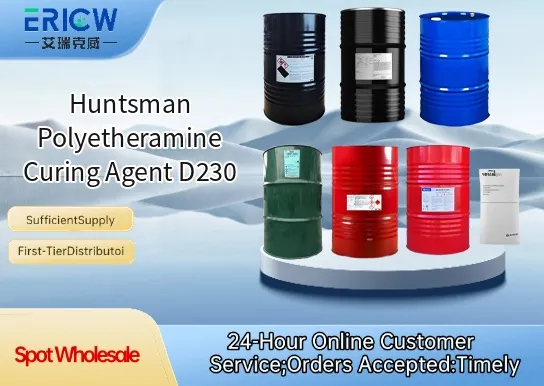
Low-viscosity liquid amine offering excellent flow and wetting characteristics for enhanced composite processing.
Balanced reactivity profile enabling extended pot life with rapid room-temperature cure development.
High flexibility and toughness in cured epoxy systems, delivering superior impact resistance and thermal shock performance.
Low volatility and low odor, supporting safer handling and improved workplace air quality versus conventional aliphatic amines.
Excellent adhesion to diverse substrates including metals, composites, and concrete without aggressive surface preparation.
Structural adhesives for aerospace and automotive bonding applications.
High-performance coatings for industrial maintenance and marine environments.
Electrical encapsulants and potting compounds requiring low stress and dimensional stability.
Wind turbine blade bonding and repair systems demanding fatigue resistance and moisture tolerance.
Concrete repair mortars and polymer-modified grouts for infrastructure rehabilitation.
| Chemical Type | Polyetheramine (diamine, branched) |
| Product Form | Liquid |
| Appearance | Clear, light yellow to amber liquid |
| Amine Value | 490–510 mg KOH/g |
| Color (APHA) | ≤100 |
| Viscosity @ 25°C | 300–500 cP |
| Primary Applications | Epoxy resin curing agent for adhesives, coatings, composites, and grouts |
| Key Features | Low viscosity, flexible cure, low volatility, excellent adhesion |
Q1: What is the primary function of D230 in epoxy systems?
A: D230 is a low-molecular-weight polyetheramine curing agent designed to react with epoxy resins, forming flexible, tough, and chemically resistant thermoset networks. It imparts excellent adhesion, low-temperature cure capability, and reduced exotherm compared to traditional amine hardeners.
Q2: How does D230 compare to other polyetheramine curing agents like D400 or T403?
A: D230 has a lower molecular weight and higher amine hydrogen equivalent weight than D400 or T403, resulting in faster reactivity, higher crosslink density, and improved flexibility in the cured film. It is particularly suited for applications requiring rapid handling strength development and enhanced impact resistance.
Q3: Is D230 suitable for moisture-sensitive or high-humidity environments?
A: Yes — D230 exhibits significantly lower sensitivity to ambient moisture compared to aliphatic or cycloaliphatic amines, making it well-suited for coatings and adhesives applied under moderate humidity conditions without severe surface blushing or amine carbamate formation.
Q4: What are typical handling and storage recommendations for D230?
A: Store in tightly sealed containers under dry, cool conditions, away from moisture, strong oxidizers, and direct sunlight. Due to its hygroscopic nature, minimize exposure to air during handling. Containers should be purged with dry nitrogen if opened repeatedly over extended periods.
Q5: Can D230 be blended with other curing agents to modify performance?
A: Yes — D230 is commonly blended with slower-reacting or higher-functionality amines (e.g., diethyltoluenediamine or aromatic polyamines) to balance pot life, cure speed, and final mechanical properties. Compatibility and stoichiometry must be evaluated empirically for each formulation.
Contact With Us:
E-mail: wangxingqiang@ericwchem.com
Have a Questions? Call Us:
Add:
Building A1, Jiete Industrial Park, Huangpu District, Guangzhou City, Guangdong Province, China