English
 Español
 tiếng việt
 русский
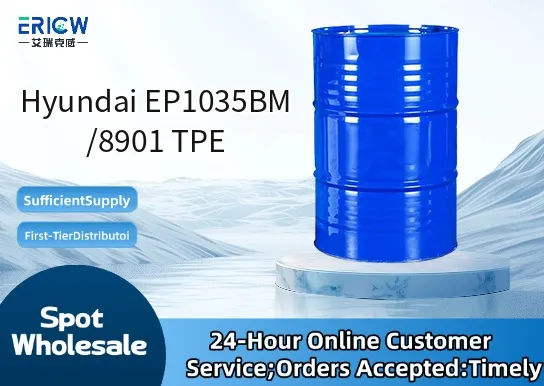
Excellent soft-touch feel with balanced elasticity and surface tack control.
Good processability on standard injection molding and extrusion equipment.
Enhanced thermal stability for consistent performance across processing temperature ranges.
Compatible with polypropylene (PP) and polyethylene (PE) substrates for co-molding applications.
Low extractables profile, supporting compliance with general-purpose industrial safety requirements.
Soft-grip overmolding for power tools and handheld appliances.
Sealing components in automotive interior trim and fluid handling systems.
Flexible hinges and living hinges in consumer electronics enclosures.
Gripping elements for medical device housings requiring non-slip functionality.
Weather-resistant exterior caps and covers for outdoor equipment.
| Chemical Type | Thermoplastic Elastomer (TPE), Styrenic Block Copolymer (SBC)-based |
| Product Form | Pellets |
| Appearance | Translucent, off-white granules |
| Primary Applications | Overmolding, soft-touch components, flexible seals |
| Key Features | Soft-touch surface, PP/PE adhesion, easy processing |
| Benefits | Reduced need for bonding agents, short cycle times, recyclable scrap |
| Density (g/cm³) | 0.90–0.92 |
| Shore A Hardness | 35 ± 3 |
Q1: What is the primary function of Hyundai EP1035BM/8901 TPE in polymer formulations?
A: Hyundai EP1035BM/8901 TPE is a thermoplastic elastomer designed to enhance flexibility, impact resistance, and soft-touch characteristics in rigid thermoplastic matrices—commonly used as a compatibilized impact modifier for polypropylene and other polyolefins.
Q2: Is this grade suitable for applications requiring regulatory compliance for food contact or medical devices?
A: While Hyundai EP1035BM/8901 TPE is formulated without intentionally added heavy metals or phthalates, it is not pre-certified for food contact or medical use. End-use compliance must be verified through full formulation testing and evaluation by the final product manufacturer against applicable regional requirements.
Q3: How should this TPE be processed during compounding or injection molding?
A: It processes readily using standard thermoplastic equipment. Recommended drying is advised prior to processing to minimize moisture-related surface defects. Typical melt temperatures range between 180–220 °C, and residence time should be minimized to preserve thermal stability and mechanical performance.
Q4: Can Hyundai EP1035BM/8901 TPE be blended with recycled polypropylene feedstocks?
A: Yes, it demonstrates good compatibility with post-industrial and post-consumer PP recyclates, helping to restore toughness and processability often lost in recycled streams—though optimal performance depends on the quality and contamination level of the recycled material.
Contact With Us:
E-mail: wangxingqiang@ericwchem.com
Have a Questions? Call Us:
Add:
Building A1, Jiete Industrial Park, Huangpu District, Guangzhou City, Guangdong Province, China