English
 Español
 tiếng việt
 русский
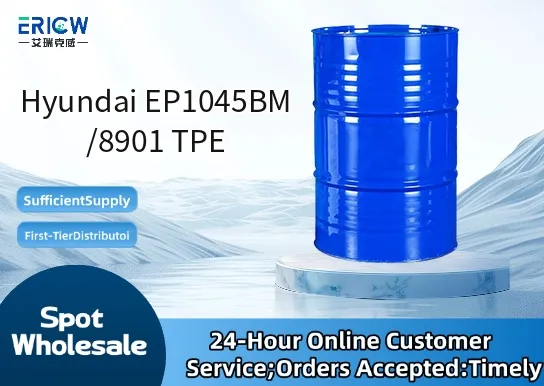
Excellent soft-touch feel with balanced hardness (Shore A 45) for ergonomic and aesthetic design.
Superior adhesion to polypropylene (PP) and polyethylene (PE) substrates without primer or surface treatment.
Good processability in injection molding and two-shot overmolding operations at standard TPE processing temperatures.
Enhanced UV resistance and long-term color stability for outdoor-facing applications.
RoHS-compliant formulation with no phthalates, heavy metals, or halogenated flame retardants.
Soft-grip overmolded handles for power tools and garden equipment.
Sealing rings and gaskets in automotive fluid systems requiring elastomeric resilience.
Consumer electronics casings and button overlays demanding tactile feedback and durability.
Household appliance components including control knobs, grips, and vibration-dampening feet.
Medical device housings and non-invasive wearable interfaces where skin contact safety is critical.
| Chemical Type | Thermoplastic Elastomer (TPE) – Styrenic Block Copolymer (SBC) based |
| Product Form | Pellets |
| Appearance | Off-white to light beige, free-flowing granules |
| Shore Hardness (A) | 45 ± 3 |
| Melt Flow Rate (200°C/5 kg) | 18–22 g/10 min |
| Density | 0.90–0.92 g/cm³ |
| Primary Applications | Two-shot overmolding, soft-touch encapsulation, sealing components |
| Key Features | PP/PE adhesion, soft-touch texture, RoHS compliance, UV-stabilized |
Q1: What is the primary function of Hyundai EP1045BM/8901 TPE in polymer formulations?
A: Hyundai EP1045BM/8901 TPE is a thermoplastic elastomer designed primarily as a compatibilizer and impact modifier for polyolefin-based blends, especially PP/EPDM and PP/POE systems. It enhances interfacial adhesion, improves toughness at low temperatures, and supports consistent melt processing.
Q2: Is this grade suitable for applications requiring food contact compliance?
A: Hyundai EP1045BM/8901 TPE is not pre-certified for food contact use. Customers intending to use it in food-contact applications must conduct full regulatory evaluation—including migration testing and compliance verification—according to their target market’s requirements. Formulation-level approval is required and cannot be assumed from base polymer certifications.
Q3: How does EP1045BM/8901 perform during injection molding compared to conventional TPEs?
A: This grade exhibits good thermal stability and low melt viscosity, enabling smooth flow in complex molds with reduced cycle times. It demonstrates minimal plate-out or die buildup under standard processing conditions and generally requires no drying prior to processing, unlike many hygroscopic TPEs.
Q4: Can EP1045BM/8901 be used in overmolding applications with rigid polypropylene substrates?
A: Yes—it is specifically engineered for soft-touch overmolding onto PP and other semi-crystalline polyolefins. Strong substrate adhesion is achieved without primers when processing parameters (e.g., mold temperature, melt temperature, and injection speed) are optimized for interfacial fusion.
Contact With Us:
E-mail: wangxingqiang@ericwchem.com
Have a Questions? Call Us:
Add:
Building A1, Jiete Industrial Park, Huangpu District, Guangzhou City, Guangdong Province, China