English
 Español
 tiếng việt
 русский
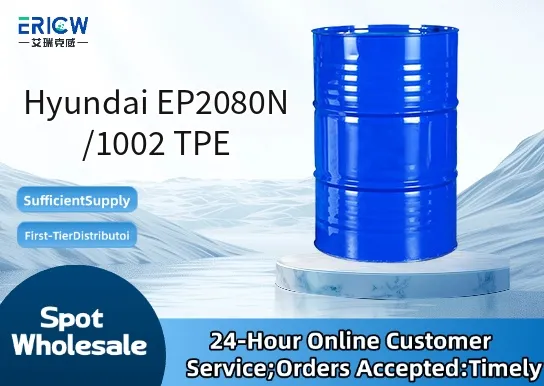
High elasticity and excellent rebound resilience for dynamic sealing and vibration-damping applications.
Good processability via injection molding and extrusion, enabling efficient high-volume production.
Outstanding resistance to UV exposure and thermal aging, ensuring long-term performance stability.
Low compression set with superior recovery after prolonged deformation under load.
Compatible with polypropylene (PP) and polyethylene (PE) substrates for co-molding and overmolding.
Automotive interior trim components including door panels, instrument bezels, and soft-touch grips.
Consumer electronics housings and protective cases requiring impact absorption and tactile comfort.
Household appliance seals, gaskets, and ergonomic handles for washing machines and vacuum cleaners.
Medical device grips and non-critical external components where flexibility and chemical resistance are valued.
Industrial tool overmolds for power tools and hand-held equipment requiring slip-resistant surfaces.
| Chemical Type | Thermoplastic Elastomer (TPE) – Styrenic Block Copolymer (SBC) based |
| Product Form | Pellets |
| Appearance | Translucent light amber granules |
| Primary Applications | Overmolding, soft-touch components, seals, and grips |
| Key Features | Elasticity, PP/PE adhesion, UV stability, low compression set |
| Benefits | Reduced assembly steps, improved ergonomics, recyclability vs. thermoset rubber |
| Density (g/cm³) | 0.90–0.92 |
| Hardness (Shore A) | 80 ± 3 |
Q1: What is the primary application domain for Hyundai EP2080N/1002 TPE?
A: Hyundai EP2080N/1002 TPE is a thermoplastic elastomer formulated for soft-touch overmolding and functional sealing applications, commonly used in automotive interior components, consumer electronics housings, and medical device grips where balanced elasticity, processability, and surface aesthetics are required.
Q2: Is this grade compatible with common engineering thermoplastics for two-shot molding?
A: Yes — EP2080N/1002 TPE exhibits good adhesion to polypropylene (PP), polyethylene (PE), and ABS substrates without requiring primers or surface treatment under standard injection molding conditions. Bond strength may vary depending on mold temperature, melt temperature, and interfacial cleanliness.
Q3: How should EP2080N/1002 be dried prior to processing?
A: This grade is hygroscopic and requires drying before processing. A typical recommendation is 2–4 hours at 60–70 °C using a desiccant dryer; moisture content should be maintained below 0.05% to ensure optimal melt stability and surface quality.
Q4: Does EP2080N/1002 contain halogenated flame retardants or heavy metals?
A: No — EP2080N/1002 is formulated without brominated or chlorinated flame retardants and complies with major global restrictions on heavy metals (e.g., RoHS, ELV). It is suitable for applications requiring halogen-free and lead-free material declarations.
Q5: What is the typical dosage range when used as a processing aid or impact modifier?
A: When incorporated into thermoplastic blends for toughness enhancement, EP2080N/1002 is typically used at low concentrations — generally ranging from 0.1% to 2% by weight — depending on the base polymer system and target performance profile.
Contact With Us:
E-mail: wangxingqiang@ericwchem.com
Have a Questions? Call Us:
Add:
Building A1, Jiete Industrial Park, Huangpu District, Guangzhou City, Guangdong Province, China