English
 Español
 tiếng việt
 русский
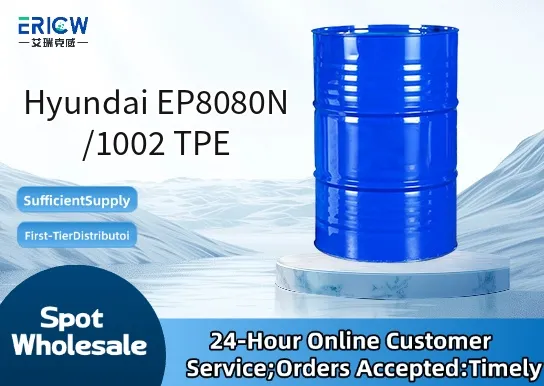
Thermoplastic elastomer (TPE) based on SEBS copolymer architecture for balanced elasticity and processability.
Excellent melt flow stability suitable for high-speed extrusion and injection molding of thin-walled parts.
Good resistance to UV exposure and thermal aging, supporting outdoor and long-term service applications.
Low extractables and compliant with FDA 21 CFR §177.2600 for food-contact compatible formulations (when compounded accordingly).
Easy colorability with masterbatches and compatibility with common polypropylene (PP) and polyethylene (PE) substrates for overmolding.
Soft-touch grips and ergonomic overmolds for power tools, medical devices, and consumer electronics.
Seals, gaskets, and flexible connectors in automotive interior trim and HVAC systems.
Flexible tubing and bellows for fluid handling in industrial and appliance applications.
Reversible bonding layers in multi-material assemblies requiring recyclability and disassembly.
Food-grade packaging components such as squeezable dispensers and reusable container seals (subject to final formulation validation).
| Chemical Type | Styrene-Ethylene/Butylene-Styrene (SEBS)-based Thermoplastic Elastomer |
| Product Form | Pellets |
| Appearance | Off-white to light amber, free-flowing granules |
| Hardness (Shore A, ASTM D2240) | 80 ± 3 |
| Melt Flow Rate (200 °C / 5 kg, ASTM D1238) | 1.2–1.8 g/10 min |
| Density (ASTM D792) | 0.90–0.92 g/cm³ |
| Tensile Strength (ASTM D412) | 8–10 MPa |
| Elongation at Break (ASTM D412) | 450–550 % |
Q1: What is the primary polymer base of Hyundai EP8080N/1002 TPE?
A: Hyundai EP8080N/1002 TPE is a thermoplastic elastomer based on a styrenic block copolymer (TPE-S) architecture, combining polystyrene end blocks with mid-blocks of hydrogenated polybutadiene or similar elastomeric segments to deliver balanced melt processability and elastic recovery.
Q2: Is this grade suitable for overmolding onto polypropylene (PP) or polyethylene (PE)?
A: Yes — EP8080N/1002 TPE is specifically formulated to provide good adhesion to semi-crystalline polyolefins such as PP and HDPE/LLDPE when processed under appropriate temperature and surface preparation conditions. Bond strength depends on mold design, melt temperature, and substrate cleanliness.
Q3: Can EP8080N/1002 be used in applications requiring food contact compliance?
A: This grade is not pre-certified for food contact use. Customers intending to use it in food-contact applications must conduct full regulatory evaluation—including extractables testing and compliance verification—based on their specific formulation, processing, and end-use conditions.
Q4: What are typical processing conditions for injection molding this TPE?
A: EP8080N/1002 processes well on standard injection molding equipment. Recommended melt temperature typically ranges from 180 °C to 220 °C, with mold temperatures between 20 °C and 40 °C. Drying is generally not required, though storage in humid environments may warrant mild pre-drying at 60–70 °C for 2–4 hours.
Q5: How does EP8080N/1002 compare to conventional TPE-S grades in terms of softness and tensile performance?
A: EP8080N/1002 offers a balance of medium softness (Shore A ~80–85) and enhanced tensile strength and elongation retention versus many general-purpose TPE-S materials, making it especially suited for durable overmolded grips, seals, and flexible housings where both tactile feel and mechanical resilience are important.
Contact With Us:
E-mail: wangxingqiang@ericwchem.com
Have a Questions? Call Us:
Add:
Building A1, Jiete Industrial Park, Huangpu District, Guangzhou City, Guangdong Province, China