English
 Español
 tiếng việt
 русский
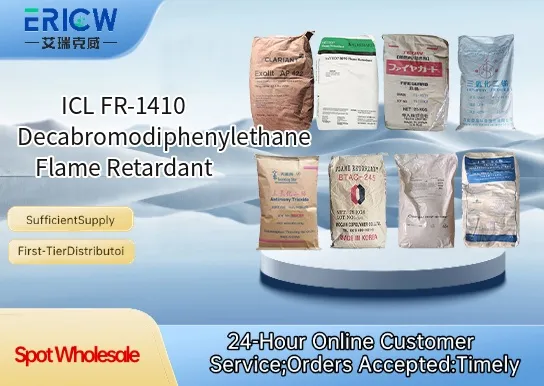
High thermal stability with decomposition onset above 300 °C, ensuring compatibility with high-temperature polymer processing.
Low volatility and minimal migration, providing long-term flame retardancy retention in finished products.
Excellent UV stability, maintaining performance and color integrity under prolonged light exposure.
Halogen content optimized for effective gas-phase flame inhibition without excessive bromine loading.
Non-dusting granular form enhances handling safety and improves dispersion in polymer matrices.
Engineering thermoplastics including ABS, HIPS, and PC/ABS blends for electronics housings.
Wire and cable jacketing compounds based on polyolefins and EVA.
Thermoset resins such as unsaturated polyester (UP) and vinyl ester used in transportation composites.
Textile backcoatings and technical fabrics requiring durable flame resistance.
Automotive interior components meeting FMVSS 302 and DIN 4102 B1 standards.
| Chemical Type | Decabromodiphenylethane (DBDPE) |
| Product Form | Free-flowing granules |
| Appearance | White to off-white granules |
| Bromine Content (min.) | 82.5 wt% |
| Assay (DBDPE, min.) | 98.0 wt% |
| Melting Point | 305–315 °C |
| Decomposition Onset Temperature | ≥300 °C (TGA, 10 °C/min, N₂) |
| Heavy Metals (as Pb) | <5 ppm |
Q1: What are the key advantages of ICL FR-1410 compared to traditional decabromodiphenyl ether (decaBDE)?
A: ICL FR-1410 is a thermally stable, non-migrating brominated flame retardant with significantly improved environmental and regulatory profile. Unlike decaBDE, it exhibits superior hydrolytic stability, negligible volatility under processing conditions, and is not classified as a PBT (persistent, bioaccumulative, toxic) substance under current major regulatory frameworks.
Q2: In which polymer systems is FR-1410 most commonly used?
A: FR-1410 is widely employed in engineering thermoplastics such as ABS, HIPS, PC/ABS blends, and polyolefins—particularly where high thermal stability and compatibility with common additives are required. It performs well in applications demanding UL 94 V-0 or V-1 ratings at relatively low loading levels.
Q3: How does FR-1410 perform during high-temperature processing, such as injection molding or extrusion?
A: FR-1410 demonstrates excellent thermal stability, remaining largely intact up to approximately 320 °C. This enables reliable performance in standard high-shear, high-temperature polymer processing without significant decomposition or discoloration, supporting consistent flame-retardant efficacy across production batches.
Q4: Is FR-1410 compatible with common antimony trioxide synergists?
A: Yes, FR-1410 is fully compatible with antimony trioxide and other metal oxide synergists. The combination delivers efficient halogen–antimony synergy, allowing formulators to achieve target flame performance at lower total additive loadings while maintaining mechanical property balance.
Contact With Us:
E-mail: wangxingqiang@ericwchem.com
Have a Questions? Call Us:
Add:
Building A1, Jiete Industrial Park, Huangpu District, Guangzhou City, Guangdong Province, China