English
 Español
 tiếng việt
 русский
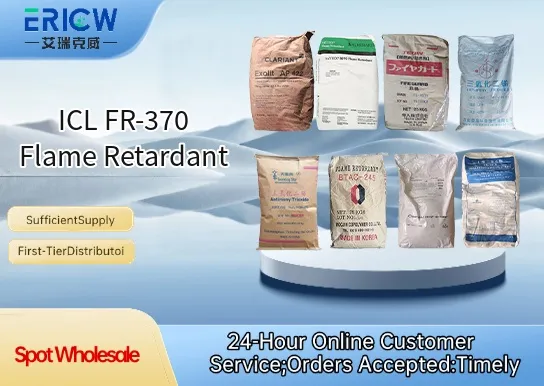
Halogen-free formulation ensuring low smoke and zero corrosive gas emission during combustion.
Excellent thermal stability, maintaining performance up to 300 °C in polymer processing conditions.
High phosphorus content enabling efficient char formation and flame inhibition in thermoplastics.
Good compatibility with polyolefins, engineering plastics, and elastomers without compromising mechanical properties.
UL 94 V-0 rated at 1.6 mm thickness in PP and PE compounds, meeting stringent fire safety standards.
Flame-retarded polypropylene (PP) for automotive interior components.
Low-smoke cables and wire jacketing in building and infrastructure wiring systems.
Electrical enclosures and housings for consumer electronics and industrial equipment.
Thermoplastic elastomer (TPE) formulations used in flexible tubing and seals.
Household appliance parts requiring RoHS-compliant, halogen-free fire protection.
| Chemical Type | Organophosphorus compound |
| Product Form | Free-flowing white granules |
| Appearance | Off-white to light beige granules |
| Density (23 °C) | 1.35–1.42 g/cm³ |
| Phosphorus Content | 18.5–19.5 wt% |
| Melting Range | 240–260 °C |
| Moisture Content (max) | 0.15 wt% |
| Primary Applications | Polyolefins, TPEs, engineering thermoplastics |
Q1: What is the primary chemical nature of ICL FR-370?
A: ICL FR-370 is a reactive phosphorus-based flame retardant designed for incorporation into polymer backbones—particularly polyurethanes and epoxy resins—via covalent bonding during synthesis, offering durable, non-migrating flame resistance.
Q2: Is ICL FR-370 suitable for flexible or rigid polyurethane foams?
A: Yes—it is widely used in both flexible slabstock and rigid insulation foams, where its reactivity enables uniform distribution and long-term stability without bloom or leaching under thermal or mechanical stress.
Q3: How does ICL FR-370 affect processing and final physical properties?
A: It generally maintains good compatibility with standard polyol/isocyanate systems and has minimal impact on viscosity, gel time, or foam density. Final products retain balanced mechanical performance—including tensile strength and elongation—while achieving enhanced fire safety.
Q4: Can ICL FR-370 be used in combination with other flame retardants?
A: Yes—it is often synergistically combined with nitrogen-containing additives or inorganic fillers to enhance char formation and reduce total additive loading, though compatibility testing in the target formulation is recommended to ensure homogeneity and performance stability.
Q5: What are typical handling and storage recommendations?
A: Store in original sealed containers at room temperature, away from moisture and direct sunlight. As a reactive liquid, it should be handled using standard industrial hygiene practices—gloves and eye protection are advised during transfer and dosing.
Contact With Us:
E-mail: wangxingqiang@ericwchem.com
Have a Questions? Call Us:
Add:
Building A1, Jiete Industrial Park, Huangpu District, Guangzhou City, Guangdong Province, China