English
 Español
 tiếng việt
 русский
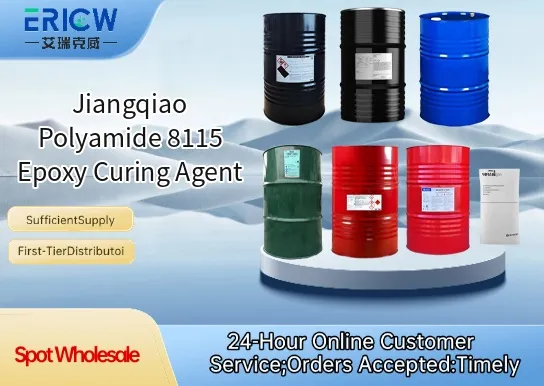
Excellent flexibility and impact resistance in cured epoxy systems.
Low viscosity enables easy handling, mixing, and improved wetting of fillers and substrates.
Good compatibility with standard bisphenol-A and bisphenol-F epoxy resins.
Extended pot life at ambient temperature, supporting practical application windows.
Low toxicity profile and minimal amine blush formation under humid conditions.
Structural adhesives for metal, composite, and wood bonding.
Protective coatings for marine, industrial, and offshore steel structures.
Electrical encapsulation and insulating compounds for transformers and busbars.
Repair mortars and grouts for concrete infrastructure rehabilitation.
High-performance flooring systems requiring chemical and abrasion resistance.
| Chemical Type | Polyamide-based aliphatic amine curing agent |
| Product Form | Liquid |
| Appearance | Amber to light brown transparent liquid |
| Viscosity (25°C) | 1,200–1,800 mPa·s |
| Amine Value | 340–380 mg KOH/g |
| Reactivity | Room-temperature curable; full cure achievable within 7 days at 25°C |
| Primary Applications | Coatings, adhesives, composites, and civil engineering materials |
| Storage Stability | 12 months in original sealed container at 15–25°C |
Q1: What is the primary application profile of Jiangqiao Polyamide 8115?
A: Jiangqiao Polyamide 8115 is a low-viscosity, aliphatic polyamide curing agent specifically formulated for ambient- and elevated-temperature cure of bisphenol-A and bisphenol-F epoxy resins. It is widely used in industrial coatings, adhesive systems, and electrical encapsulation where flexibility, chemical resistance, and good adhesion to damp or slightly contaminated substrates are required.
Q2: How does Polyamide 8115 compare to conventional amine-based hardeners in terms of handling safety and pot life?
A: Compared to standard aliphatic amines, Polyamide 8115 offers significantly reduced volatility and skin sensitization potential, resulting in improved workplace safety and easier handling. Its molecular structure provides extended pot life—typically several hours at room temperature—enabling greater processing flexibility in coating and casting applications without rapid gelation.
Q3: Is Polyamide 8115 suitable for high-humidity or low-surface-energy substrate applications?
A: Yes—Polyamide 8115 exhibits strong affinity for polar and moderately non-polar surfaces, and its formulation supports reliable curing even under moderate humidity conditions. It is frequently selected for applications involving concrete, galvanized steel, and aged polymer substrates where interfacial adhesion and moisture tolerance are critical.
Q4: What is the typical dosage range when formulating with standard liquid epoxy resins?
A: Dosage depends on the specific epoxy resin, desired cure profile, and end-use requirements. As a general guideline, Polyamide 8115 is typically used at low concentrations relative to resin weight—commonly ranging from 0.1% to 2% by weight for catalytic or co-curing roles, or at higher ratios (e.g., 40–100 phr) when serving as the primary curing agent. Optimal ratios should be confirmed through small-scale compatibility and cure testing.
Contact With Us:
E-mail: wangxingqiang@ericwchem.com
Have a Questions? Call Us:
Add:
Building A1, Jiete Industrial Park, Huangpu District, Guangzhou City, Guangdong Province, China