English
 Español
 tiếng việt
 русский
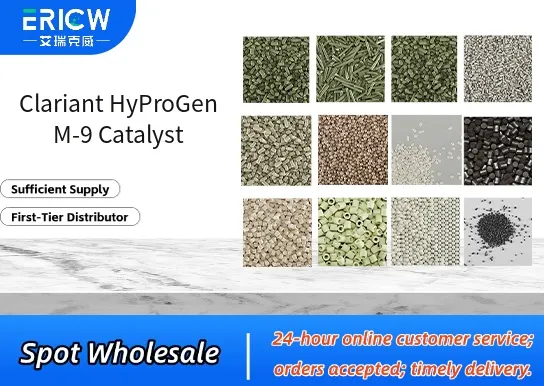
Highly selective palladium-based formulation optimized for low-temperature hydrogenation reactions.
Enhanced thermal and chemical stability under continuous industrial process conditions.
Controlled metal dispersion ensures consistent activity and extended catalyst lifetime.
Sulfur-tolerant design maintains performance in feedstocks with trace impurities.
Available in standardized pellet and extrudate forms for flexible reactor integration.
Pharmaceutical intermediate synthesis, including chiral nitroarene and enamine hydrogenation.
Fine chemical production of saturated heterocycles and functionalized aliphatic amines.
Agrochemical manufacturing, particularly for selective reduction of unsaturated carbonyl compounds.
Electronic materials precursor purification via catalytic dehalogenation.
Specialty polymer additive synthesis requiring high chemoselectivity and minimal over-reduction.
| Chemical Type | Palladium on high-surface-area carbon support |
| Product Form | Extruded cylindrical pellets (1.5 mm diameter × 3–5 mm length) |
| Appearance | Black, free-flowing granular solid |
| Pd Loading | 5.0 wt% ± 0.3 wt% |
| BET Surface Area | 900–1100 m²/g |
| Ignition Loss (400 °C, 1 hr) | ≤ 12% |
| Primary Applications | Selective hydrogenation of nitro, nitrile, and olefin functionalities |
| Key Features | Low leaching, high reproducibility, batch-to-batch consistency per ISO 9001 certified manufacturing |
Q1: What is the primary function of the JM888 catalyst in polymerization processes?
A: JM888 is a high-activity, thermally stable transition metal-based catalyst designed to facilitate controlled condensation and addition polymerization reactions—particularly in engineering thermoplastics and high-performance polyesters—enabling improved molecular weight development and reduced side reactions under moderate processing conditions.
Q2: How should JM888 be handled and stored to maintain its catalytic activity?
A: JM888 should be stored under inert atmosphere (e.g., nitrogen or argon), protected from moisture, oxygen, and light. It is recommended to keep it sealed in its original packaging at temperatures between 5 °C and 25 °C. Avoid prolonged exposure to ambient air during handling, as oxidation or hydrolysis may diminish performance.
Q3: Is JM888 compatible with common industrial polymer processing equipment?
A: Yes—JM888 is formulated for seamless integration into standard melt-phase polymerization systems, including continuous stirred-tank reactors (CSTRs) and tubular reactors. Its thermal stability and low volatility support consistent dosing and uniform dispersion without significant fouling or degradation in typical extrusion or spinning lines.
Q4: Can JM888 be used in food-contact or medical-grade polymer applications?
A: JM888 is not pre-certified for direct food-contact or implantable medical device applications. Its suitability for regulated end uses depends on full formulation assessment, final extraction testing, and compliance verification by the end-user under applicable regional regulatory frameworks.
Contact With Us:
E-mail: wangxingqiang@ericwchem.com
Have a Questions? Call Us:
Add:
Building A1, Jiete Industrial Park, Huangpu District, Guangzhou City, Guangdong Province, China