English
 Español
 tiếng việt
 русский
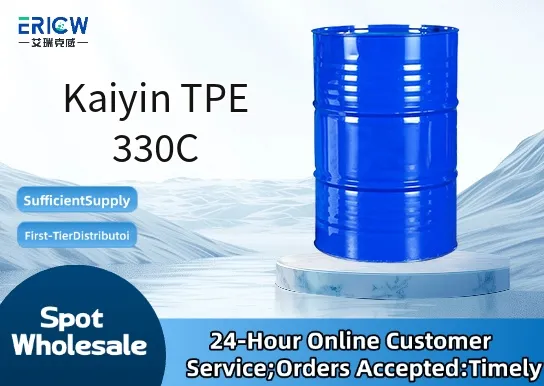
Excellent soft-touch feel with balanced hardness (Shore A 30–35) for ergonomic handling.
Good thermal stability for injection molding and extrusion processing at standard TPE temperatures.
Outstanding compatibility with polypropylene (PP) and polyethylene (PE) substrates for overmolding.
Low extractables and compliant with FDA 21 CFR §177.2600 for food-contact-adjacent applications.
Recyclable thermoplastic structure enabling material regrind reuse without significant property loss.
Soft-grip overmolded handles for power tools and garden equipment.
Sealing rings and gaskets in automotive fluid systems.
Flexible hinges and living hinges in consumer electronics enclosures.
Medical device grips and non-sterile wearable component housings.
Reusable packaging closures and squeeze bottles requiring elasticity and chemical resistance.
| Chemical Type | Thermoplastic Elastomer (TPE), Styrenic Block Copolymer (SBC)-based |
| Product Form | Pellets, free-flowing, uniform size |
| Appearance | Translucent off-white to light amber granules |
| Hardness (Shore A) | 33 ± 2 |
| Melt Flow Rate (230°C/2.16 kg) | 18–22 g/10 min |
| Density | 0.91–0.93 g/cm³ |
| Key Features | Soft-touch, PP/PE adhesion, low-temperature flexibility down to –40°C |
| Benefits | Reduced cycle time vs. TPV, no vulcanization required, low odor & extractables |
Q1: What is Kaiyin TPE 330C primarily used for?
A: Kaiyin TPE 330C is a thermoplastic elastomer modifier designed to enhance flexibility, resilience, and processability in polyolefin-based compounds—commonly applied in soft-touch overmolding, flexible packaging films, and elastic components for consumer and industrial products.
Q2: Is Kaiyin TPE 330C compatible with polypropylene (PP) and polyethylene (PE)?
A: Yes, it exhibits good compatibility with both homopolymer and copolymer PP as well as LDPE and HDPE matrices, enabling uniform dispersion and improved melt elasticity without requiring specialized compatibilizers in most standard formulations.
Q3: How is Kaiyin TPE 330C typically incorporated into a compound?
A: It is generally introduced during the compounding stage via twin-screw extrusion, either as pellets or pre-blended masterbatch. Dosage depends on formulation requirements but typically ranges from 0.1% to 2% by weight to achieve desired softness and recovery performance.
Q4: Does Kaiyin TPE 330C require drying before processing?
A: While not highly hygroscopic, it is recommended to dry Kaiyin TPE 330C at 60–70 °C for 2–4 hours prior to high-precision or high-moisture-sensitivity applications to ensure optimal melt stability and surface quality.
Q5: Can Kaiyin TPE 330C be used in food-contact applications?
A: Kaiyin TPE 330C is formulated without intentionally added heavy metals or known SVHCs, and may be suitable for indirect food-contact use depending on final compound composition and regulatory review—but formal food-contact compliance requires full formulation assessment and third-party verification per applicable regional regulations.
Contact With Us:
E-mail: wangxingqiang@ericwchem.com
Have a Questions? Call Us:
Add:
Building A1, Jiete Industrial Park, Huangpu District, Guangzhou City, Guangdong Province, China