English
 Español
 tiếng việt
 русский
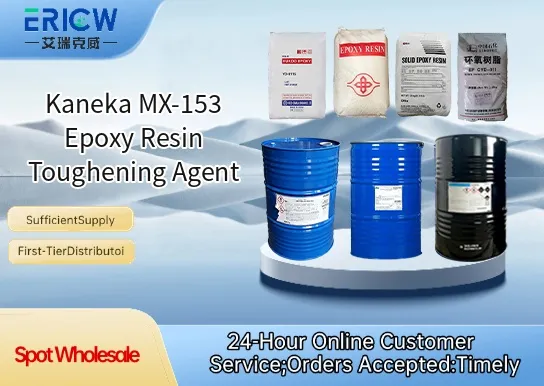
Reactive liquid modifier enabling phase-separated morphology for enhanced fracture toughness without sacrificing Tg.
Excellent compatibility with standard DGEBA-type epoxy resins and common amine or anhydride curing agents.
Low viscosity (< 500 mPa·s at 25°C) facilitates easy incorporation and homogeneous dispersion in epoxy formulations.
Significantly improves impact resistance and delamination resistance in cured composites and adhesives.
Enables high-performance toughening at low addition levels (typically 5–15 wt% relative to epoxy resin).
Aerospace structural adhesives and composite matrix resins.
High-reliability electronic encapsulants and underfills.
Wind turbine blade bonding and prepreg matrices.
Automotive under-hood components and carbon fiber reinforced parts.
Industrial tooling and high-strength castings requiring crack arrest capability.
| Chemical Type | Reactive carboxyl-terminated liquid polymer |
| Product Form | Clear, amber-colored liquid |
| Appearance | Homogeneous, low-viscosity liquid |
| Primary Applications | Epoxy resin toughening for structural composites and adhesives |
| Key Features | Phase-separating toughener, reactive functionality, low volatility |
| Benefits | Improved fracture energy (GIC), retained thermal stability, no blooming |
| Storage Conditions | Store at 5–30°C in sealed containers; protect from moisture |
| Shelf Life | 12 months from date of manufacture when stored properly |
Q1: What is the primary function of Kaneka MX-153 in epoxy systems?
A: Kaneka MX-153 is a reactive liquid toughening agent designed to enhance impact resistance and fracture toughness of cured epoxy resins without significantly compromising thermal stability or modulus. It functions through phase separation and formation of a dispersed rubbery domain during cure.
Q2: Is MX-153 compatible with standard epoxy curing agents?
A: Yes, MX-153 demonstrates broad compatibility with common amine-based (e.g., DETA, IPDA, DDS) and anhydride curing agents. It remains stable in formulated epoxy resins prior to cure and participates in the crosslinking reaction via its terminal epoxy groups.
Q3: How does MX-153 affect viscosity and processing behavior?
A: As a low-viscosity liquid, MX-153 reduces the overall formulation viscosity compared to solid tougheners, improving mixability and enabling easier incorporation into high-solids or solvent-free systems. Its effect on pot life is generally minimal at typical usage levels.
Q4: Does MX-153 require special handling or storage conditions?
A: MX-153 should be stored in tightly sealed containers under dry, cool conditions (preferably below 30°C) and protected from moisture and prolonged exposure to air. It is non-hazardous under normal handling but good industrial hygiene practices—such as using gloves and eye protection—are recommended.
Q5: Can MX-153 be used in aerospace or electronics-grade epoxy formulations?
A: MX-153 is suitable for high-performance applications including structural composites and electronic encapsulants where improved toughness and reliability are required. Its low volatility and reactivity profile support use in demanding environments, though final qualification depends on full system validation by the formulator.
Contact With Us:
E-mail: wangxingqiang@ericwchem.com
Have a Questions? Call Us:
Add:
Building A1, Jiete Industrial Park, Huangpu District, Guangzhou City, Guangdong Province, China