English
 Español
 tiếng việt
 русский
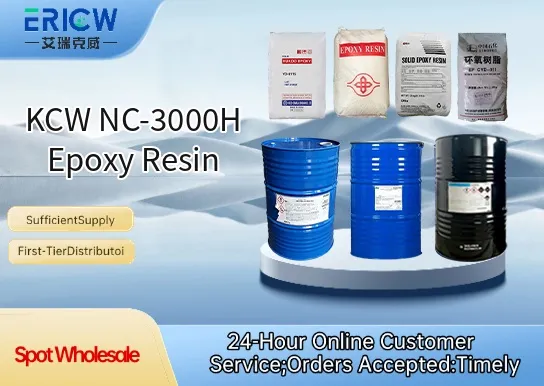
High-performance bisphenol-A based liquid epoxy resin with low viscosity for excellent processability.
Superior thermal stability and glass transition temperature (Tg) after curing with standard amine hardeners.
Excellent adhesion to metals, composites, and cured polymer substrates without surface priming.
Low ionic impurity content ensuring high electrical insulation resistance and reliability in electronic encapsulation.
Consistent batch-to-batch quality certified to ISO 9001 manufacturing standards.
Electrical potting and encapsulation of transformers, inductors, and power modules.
Structural adhesive formulations for aerospace composite bonding and repair.
High-voltage insulating coatings for busbars, switchgear components, and bushings.
Matrix resin in filament-wound pressure vessels and carbon fiber reinforced tanks.
Underfill material for flip-chip and advanced semiconductor packaging.
| Chemical Type | Bisphenol-A epoxy resin |
| Product Form | Clear, low-viscosity liquid |
| Appearance | Pale yellow to water-white, transparent |
| Epoxy Equivalent Weight (EEW) | 185–192 g/eq |
| Viscosity (25°C) | 12,000–14,500 cP |
| Chloride Content | ≤ 800 ppm |
| Volatiles Content | ≤ 0.3 wt% |
| Storage Stability (25°C) | ≥ 12 months in sealed container |
Q1: What is the primary functional role of KCW NC-3000H in epoxy formulations?
A: KCW NC-3000H is a reactive liquid diluent designed to reduce viscosity and improve processability of standard bisphenol-A or bisphenol-F based epoxy resins without significantly compromising crosslink density or thermal performance.
Q2: Is KCW NC-3000H compatible with common amine-based hardeners?
A: Yes — it exhibits broad compatibility with aliphatic, cycloaliphatic, and aromatic amine hardeners, as well as anhydride curing systems, supporting consistent reactivity and homogeneous network formation during cure.
Q3: How does KCW NC-3000H affect the final cured film properties compared to non-diluted epoxy systems?
A: When used at recommended levels, it maintains good mechanical strength, chemical resistance, and adhesion while enhancing flow and reducing entrapped air — though excessive loading may slightly lower heat distortion temperature and glass transition.
Q4: What are the recommended storage conditions for KCW NC-3000H?
A: Store in tightly sealed original containers under cool, dry, and well-ventilated conditions, away from direct sunlight and strong oxidizing agents. Prolonged exposure to elevated temperatures or moisture should be avoided to preserve reactivity and shelf life.
Contact With Us:
E-mail: wangxingqiang@ericwchem.com
Have a Questions? Call Us:
Add:
Building A1, Jiete Industrial Park, Huangpu District, Guangzhou City, Guangdong Province, China