English
 Español
 tiếng việt
 русский
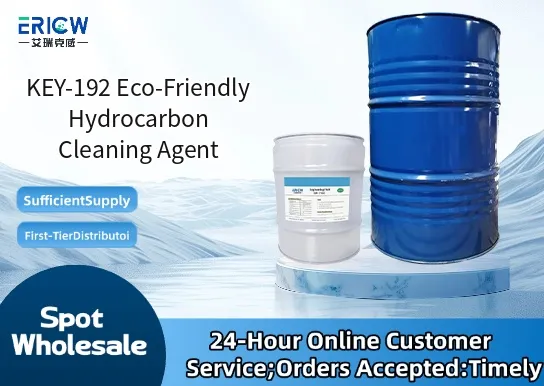
Zero ozone-depleting potential (ODP = 0) and ultra-low global warming potential (GWP < 15).
Non-chlorinated, non-halogenated hydrocarbon formulation meeting strict REACH and TSCA compliance requirements.
Fast-evaporating with low surface tension for superior penetration into micro-gaps and complex geometries.
Non-corrosive to aluminum, copper, stainless steel, and most common elastomers including Viton® and EPDM.
Readily biodegradable (OECD 301B > 60% in 28 days) with no persistent bioaccumulation concerns.
Precision cleaning of metal stampings, machined components, and electronic assemblies prior to plating or coating.
Removal of light oils, greases, flux residues, and particulate contaminants from aerospace engine parts and avionics housings.
Cleaning of optical lenses, medical device components, and surgical instruments requiring residue-free, non-toxic processing.
Pre-assembly degreasing of automotive sensors, fuel system components, and EV battery module housings.
Final rinse and drying support in aqueous-based cleaning lines where low-water solubility and rapid phase separation are critical.
| Chemical Type | Refined aliphatic hydrocarbon blend |
| Product Form | Liquid (clear, colorless) |
| Appearance | Clear, water-white liquid |
| Boiling Range | 155–175 °C |
| Density (20 °C) | 0.74–0.76 g/cm³ |
| Flash Point (Tag Closed Cup) | 62 °C |
| Primary Applications | Vapor degreasing, cold cleaning, ultrasonic immersion |
| Regulatory Compliance | REACH SVHC-free, TSCA-listed, California Prop 65 compliant, VOC-exempt (US EPA) |
| Common Compatible Systems | Suitability |
| Vapor degreasing equipment (e.g., BOC Edwards, KYZEN VDT series) | Highly Recommended – Optimized for condenser recovery and minimal carryover |
| Ultrasonic cleaning tanks with stainless-steel construction | Highly Recommended – Stable under 40–60 kHz; no foaming or emulsification |
| Aqueous pre-cleaning + KEY-192 final rinse lines | Recommended – Immiscible with water; enables efficient phase separation and solvent recovery |
| Manual spray cleaning carts with HVLP nozzles | Suitable – Low viscosity and controlled evaporation support consistent coverage without pooling |
Q1: What is the CAS Registry Number for KEY-192?
A: The CAS RN for KEY-192 is 8052-41-3 (refined petroleum distillates, C9–C12 aliphatics).
Q2: What is the recommended usage concentration or application method?
A: KEY-192 is used neat (100% concentration) in vapor degreasers and ultrasonic baths; for manual wipe-down, apply undiluted using lint-free wipes—no dilution required.
Q3: How does KEY-192 compare to traditional chlorinated solvents like TCE or nPB?
A: Unlike TCE or nPB, KEY-192 contains no chlorine or bromine, eliminating workplace toxicity risks (e.g., neurotoxicity, suspected carcinogenicity) and enabling safer handling without NIOSH-certified respirators in well-ventilated areas.
Q4: Does KEY-192 meet ISO 14644-1 Class 5 cleanroom compatibility requirements?
A: Yes—KEY-192 leaves no ionic residue, volatile by-products, or silicone contamination; validated per IEST-STD-CC1246D for particle generation and extractables testing.
Q5: Can KEY-192 be used for cleaning components prior to medical device sterilization (e.g., EtO or gamma)?
A: Yes—KEY-192 is widely accepted for pre-sterilization cleaning of Class II/III devices; it exhibits negligible extractables per USP <87> and <88>, and does not interfere with subsequent sterilant diffusion or validation protocols.
Contact With Us:
E-mail: wangxingqiang@ericwchem.com
Have a Questions? Call Us:
Add:
Building A1, Jiete Industrial Park, Huangpu District, Guangzhou City, Guangdong Province, China