English
 Español
 tiếng việt
 русский
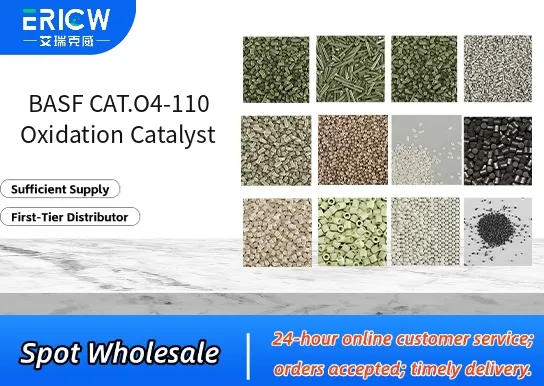
Highly selective palladium-based heterogeneous catalyst optimized for cross-coupling reactions.
Thermally stable up to 180 °C, enabling robust performance in extended batch and continuous processes.
Low residual metal leaching (<0.5 ppm Pd), meeting stringent pharmaceutical and fine chemical purity requirements.
Pre-dispersed on high-surface-area carbon support for consistent activity and easy handling.
Compatible with standard organic solvents including THF, DMF, toluene, and alcohols.
Suzuki–Miyaura coupling for API intermediate synthesis.
Heck reactions in agrochemical active ingredient manufacturing.
Stille and Negishi couplings in electronic materials precursor production.
C–N bond formation (Buchwald–Hartwig amination) for functionalized heterocycles.
Scale-up of catalytic hydrogenation steps where chemoselectivity is critical.
| Chemical Type | Palladium on activated carbon |
| Product Form | Free-flowing black powder |
| Appearance | Black granular solid |
| Palladium Content | 5.0 ± 0.3 wt% |
| Carbon Support Surface Area | ≈1000 m²/g |
| Particle Size Distribution | 90% retained on 100 μm sieve |
| Moisture Content | ≤1.0 wt% |
| Primary Applications | Cross-coupling, C–C & C–N bond formation |
Q1: What is the primary function of N-2107 in polyurethane systems?
A: N-2107 is a selective amine-based catalyst designed to promote urethane (polyol–isocyanate) bond formation while providing balanced control over gelation and surface cure—particularly beneficial in flexible slabstock and molded foam applications where cream time and rise profile require precise tuning.
Q2: Is N-2107 compatible with other common catalysts used in PU foam formulations?
A: Yes, N-2107 is generally compatible with tertiary amine catalysts (e.g., DABCO® 33-LV, TEDA-L36) and metal-based catalysts (e.g., stannous octoate), allowing formulators to fine-tune reactivity profiles. Compatibility testing under actual processing conditions is recommended to confirm performance synergy and avoid unintended latency or phase separation.
Q3: How should N-2107 be handled and stored to maintain stability?
A: Store in tightly sealed containers under inert atmosphere (e.g., nitrogen) at temperatures between 15–25°C, away from moisture, strong oxidizers, and direct sunlight. Prolonged exposure to air may lead to gradual degradation due to its amine functionality; therefore, minimizing headspace and using within 12 months of opening is advised.
Q4: Can N-2107 be used in low-emission or automotive-grade foam systems?
A: Yes, N-2107 is formulated to support low-VOC and low-odor requirements typical of interior automotive and furniture foams. Its reactivity profile helps reduce residual catalyst content and volatile by-products when optimized in conjunction with appropriate polyol and isocyanate selection and processing parameters.
Contact With Us:
E-mail: wangxingqiang@ericwchem.com
Have a Questions? Call Us:
Add:
Building A1, Jiete Industrial Park, Huangpu District, Guangzhou City, Guangdong Province, China