English
 Español
 tiếng việt
 русский
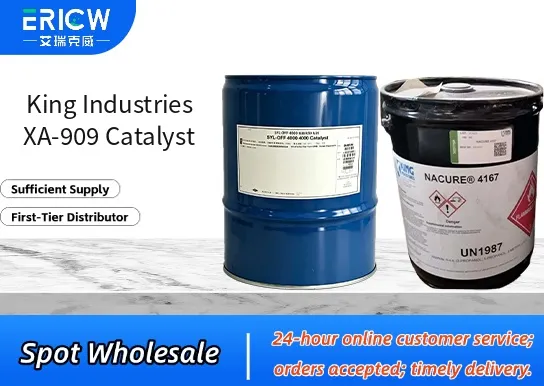
Highly selective palladium-based heterogeneous catalyst for cross-coupling reactions.
Thermally stable up to 220 °C, enabling robust performance in extended batch processes.
Low leaching profile (<0.1 ppm Pd in filtrate), ensuring product purity and catalyst recyclability.
Engineered with controlled particle size distribution (D50 = 18–22 µm) for optimal slurry handling and filtration.
Sulfur-tolerant formulation maintains activity in feedstocks containing trace sulfur impurities.
Pharmaceutical intermediate synthesis via Suzuki–Miyaura coupling.
Agrochemical active ingredient manufacturing requiring high regioselectivity.
Electronic materials production, including conjugated polymers for OLED precursors.
Fine chemical synthesis of chiral biaryl scaffolds under mild reaction conditions.
Continuous-flow catalytic hydrogenation of aryl halides in microreactor systems.
| Chemical Type | Palladium on carbon-supported phosphine-ligated complex |
| Product Form | Free-flowing black granular solid |
| Appearance | Uniform dark gray to black granules |
| Palladium Content | 5.0 ± 0.3 wt% |
| Moisture Content | ≤ 0.5 wt% (by Karl Fischer titration) |
| Particle Size (D50) | 20 ± 2 µm |
| Primary Applications | Cross-coupling, reductive amination, dehalogenation |
| Storage Conditions | Under inert atmosphere at 2–8 °C; protect from moisture and light |
Q1: What is the primary application of XA-909 in polymer systems?
A: XA-909 is a high-efficiency transesterification catalyst primarily used to accelerate ester interchange reactions in polyester synthesis and modification—especially in PET, PBT, and specialty copolyester formulations where controlled molecular weight build-up and narrow polydispersity are required.
Q2: How does XA-909 compare to traditional antimony-based catalysts in terms of color stability?
A: Unlike antimony trioxide, XA-909 enables excellent thermal and color stability during melt processing, minimizing yellowing and reducing the need for additional stabilizers—particularly beneficial for light-colored and clear polyester applications.
Q3: Is XA-909 compatible with common polyester additives such as UV absorbers and phosphites?
A: Yes, XA-909 demonstrates good compatibility with standard polyester additive packages, including phosphite antioxidants and benzotriazole-type UV absorbers, without significant interference in catalytic performance or final resin clarity.
Q4: What is the typical dosage range for XA-909 in industrial polyester production?
A: XA-909 is typically used at low concentrations, generally ranging from 0.1% to 2% by weight relative to the total monomer charge, depending on reaction kinetics targets, desired molecular weight, and process conditions.
Contact With Us:
E-mail: wangxingqiang@ericwchem.com
Have a Questions? Call Us:
Add:
Building A1, Jiete Industrial Park, Huangpu District, Guangzhou City, Guangdong Province, China