English
 Español
 tiếng việt
 русский
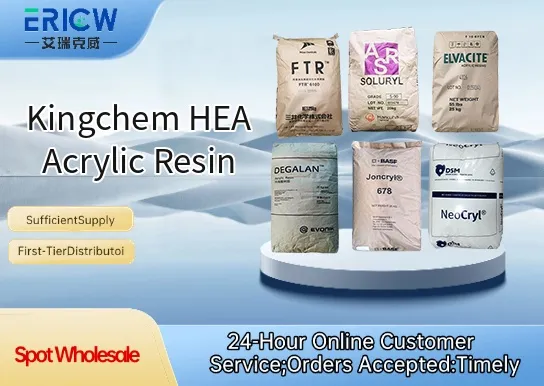
High reactivity with hydroxyl and carboxyl functional groups for efficient crosslinking.
Excellent weather resistance and UV stability for long-term outdoor performance.
Low viscosity enables easy formulation and improved pigment wetting in coatings.
Superior gloss retention and film clarity in clear and pigmented systems.
Compatible with common acrylic monomers, polyols, and melamine formaldehyde resins.
Automotive OEM and refinish topcoats.
Industrial maintenance and protective coatings.
Architectural high-performance exterior paints.
Plastic and metal substrate coatings requiring flexibility and adhesion.
UV-curable hybrid coating formulations.
| Chemical Type | Hydroxyethyl acrylate-based acrylic copolymer |
| Product Form | Clear to slightly hazy liquid |
| Appearance | Colorless to pale yellow liquid |
| Primary Applications | Crosslinkable binder for thermoset acrylic coatings |
| Key Features | Reactive hydroxyl functionality (OH #: 85–105 mg KOH/g) |
| Benefits | Enables low-bake curing and enhanced chemical resistance |
| Solvent Content | Non-aqueous; typically supplied in aromatic or ester solvents |
| Storage Stability | Stable for 12 months at 25°C in sealed containers |
Q1: What is the primary function of Kingchem HEA Acrylic Resin in coating formulations?
A: Kingchem HEA Acrylic Resin serves as a reactive diluent and crosslinking promoter, enhancing film hardness, gloss, and chemical resistance while maintaining low viscosity for improved application properties.
Q2: Is this resin compatible with common industrial curing systems?
A: Yes, it demonstrates good compatibility with UV-curable, thermal-cure, and hybrid systems—particularly when used with acrylate monomers, epoxy acrylates, and amino resins.
Q3: How should Kingchem HEA Acrylic Resin be stored to maintain stability?
A: Store in tightly sealed containers under cool, dry conditions, away from direct sunlight and strong oxidizers. Prolonged exposure to elevated temperatures or moisture may affect reactivity and shelf life.
Q4: Can it be used in low-VOC or high-solids coatings?
A: Yes—it supports VOC reduction strategies due to its high functionality and low volatility, and is commonly incorporated into high-solids and solvent-free formulations without compromising cure efficiency.
Contact With Us:
E-mail: wangxingqiang@ericwchem.com
Have a Questions? Call Us:
Add:
Building A1, Jiete Industrial Park, Huangpu District, Guangzhou City, Guangdong Province, China