English
 Español
 tiếng việt
 русский
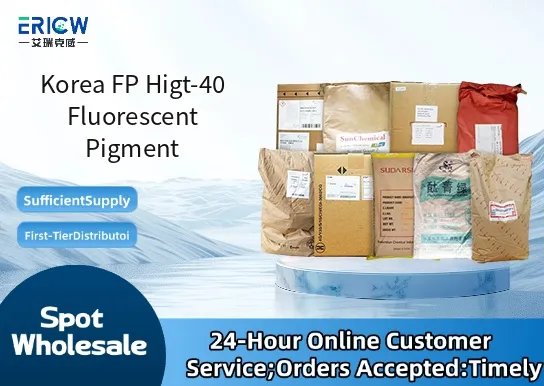
High-intensity fluorescence under UV and daylight illumination.
Excellent thermal stability up to 180°C during processing.
Good dispersion performance in both polar and non-polar resin systems.
Low migration tendency in polymer matrices, ensuring long-term color fidelity.
Compliant with major international regulatory frameworks for non-food-contact industrial applications.
Injection-molded safety signage and warning components.
Extruded fluorescent profiles for architectural and transportation markings.
Fluorescent masterbatches for HDPE and PP packaging films (non-food grade).
UV-curable inks for industrial coding and traceability labels.
Thermoplastic elastomer (TPE) products requiring high-visibility identification.
| Chemical Type | Dispersed organic fluorescent compound (benzoxazole derivative) |
| Product Form | Free-flowing powder |
| Appearance | Yellowish-green free-flowing powder |
| Primary Applications | Polyolefins, engineering plastics, UV-curable coatings & inks |
| Key Features | High brightness, low dusting, solvent-resistant |
| Benefits | Enhanced visibility, process robustness, consistent batch-to-batch performance |
| Recommended Loading Range | 0.2–2.0 wt% depending on substrate and desired intensity |
| Storage Conditions | Store in cool, dry place below 30°C; protect from direct sunlight and moisture |
Q1: What types of resin systems is Korea FP Higt-40 compatible with?
A: Korea FP Higt-40 demonstrates good compatibility with a broad range of thermoplastic and thermosetting systems, including ABS, PS, PVC, acrylics, polyesters, and epoxy resins. Performance may vary depending on processing temperature and shear conditions, so dispersion optimization is recommended during formulation.
Q2: How does Higt-40 perform under UV exposure and thermal processing?
A: Higt-40 is engineered for enhanced photostability compared to conventional fluorescent pigments, offering improved resistance to UV-induced fading during service life. It also exhibits reasonable thermal stability up to typical melt-processing temperatures for common polymers, though prolonged residence at elevated temperatures (>220°C) should be minimized to preserve fluorescence intensity.
Q3: Is special dispersion equipment required for optimal results?
A: While Higt-40 can be incorporated using standard compounding equipment such as twin-screw extruders or high-speed mixers, achieving uniform dispersion and maximum fluorescence intensity benefits from optimized screw design, controlled feed rate, and appropriate temperature profiling. Pre-dispersed masterbatches are also widely used in industrial practice for consistent dosing and handling.
Q4: Can Higt-40 be used in applications requiring regulatory compliance for indirect food contact?
A: Korea FP Higt-40 is not pre-approved for direct or indirect food-contact applications under major global regulatory frameworks. Customers intending such use must conduct full regulatory assessment—including migration testing and toxicological review—based on their specific end-use conditions and applicable jurisdictional requirements.
Contact With Us:
E-mail: wangxingqiang@ericwchem.com
Have a Questions? Call Us:
Add:
Building A1, Jiete Industrial Park, Huangpu District, Guangzhou City, Guangdong Province, China