English
 Español
 tiếng việt
 русский
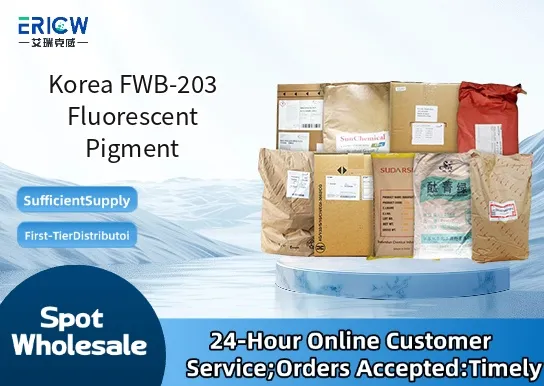
High-intensity fluorescence under UV and daylight illumination.
Excellent thermal stability up to 220°C for extrusion and compounding processes.
Good compatibility with common thermoplastic resins including PP, PE, ABS, and PS.
Low migration tendency in polymer matrices, ensuring long-term color consistency.
Non-hazardous formulation compliant with REACH and RoHS directives.
Fluorescent signage and safety markings for industrial and transportation use.
UV-responsive packaging films and labels for brand authentication.
Bright-colored components in automotive interior trim and dashboard elements.
Fluorescent masterbatches for injection-molded consumer goods and promotional items.
Specialty inks for security printing and anti-counterfeiting applications.
| Chemical Type | Dispersed organic fluorescent pigment |
| Product Form | Free-flowing fine powder |
| Appearance | Yellowish-green powder with bright green-yellow fluorescence |
| Primary Applications | Polymer coloring, masterbatch, coatings, and specialty inks |
| Key Features | UV-stable, non-bleeding, low-dusting, high chroma |
| Recommended Loading Range | 0.1–2.0 wt% (varies by resin and application) |
| Storage Conditions | Store in cool, dry place below 30°C; protect from direct sunlight |
| Regulatory Compliance | REACH registered, RoHS compliant, non-POPs |
Q1: What types of resin systems is FWB-203 compatible with?
A: FWB-203 demonstrates good compatibility with a broad range of thermoplastic and thermosetting polymers, including ABS, PS, PC, PMMA, PVC, and epoxy-based systems. Performance may vary depending on processing temperature and residence time, so preliminary compatibility testing is recommended for each specific formulation.
Q2: How stable is FWB-203 under UV exposure and thermal processing?
A: FWB-203 offers enhanced thermal stability compared to conventional fluorescent pigments and retains strong fluorescence after standard injection molding and extrusion processes. While it provides improved UV resistance, prolonged direct UV exposure—especially in outdoor applications—may gradually reduce intensity over time; co-stabilization with UV absorbers or HALS is advised for extended service life.
Q3: Is FWB-203 suitable for applications requiring regulatory compliance for food contact or toys?
A: FWB-203 is not pre-certified for food-contact or toy safety regulations (e.g., FDA 21 CFR, EU Plastics Regulation, or EN71-3). Its suitability depends on final formulation, migration behavior, and end-use conditions. Customers must conduct full regulatory evaluation—including extractable analysis and toxicological assessment—prior to use in regulated applications.
Q4: What is the typical dosage range for achieving optimal fluorescence intensity?
A: Optimal loading generally ranges from 0.1% to 2% by weight, depending on polymer type, desired brightness, part thickness, and processing method. Due to its high chroma and strong fluorescence, FWB-203 is typically used at low concentrations—excessive dosage may lead to aggregation or reduced transparency without proportional gain in performance.
Contact With Us:
E-mail: wangxingqiang@ericwchem.com
Have a Questions? Call Us:
Add:
Building A1, Jiete Industrial Park, Huangpu District, Guangzhou City, Guangdong Province, China