English
 Español
 tiếng việt
 русский
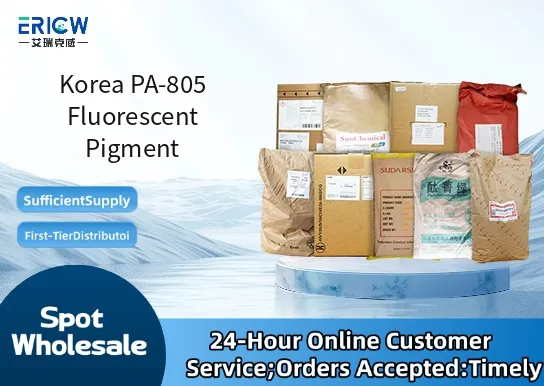
High-intensity fluorescence under UV and daylight illumination.
Excellent thermal stability up to 180°C for processing in extrusion and injection molding.
Good dispersion performance in both polar and non-polar polymer matrices.
Low migration tendency, ensuring color consistency in long-term applications.
Compliant with major global regulatory frameworks for non-food-contact industrial use.
Fluorescent masterbatches for polyolefins (PP, PE) and engineering plastics (ABS, PS).
Safety signage and high-visibility markings in traffic and construction sectors.
UV-responsive inks for security printing and authentication labels.
Specialty coatings for outdoor advertising panels and reflective signage.
Decorative plastic components in consumer electronics and automotive trim.
| Chemical Type | Disazo-based fluorescent organic pigment |
| Product Form | Free-flowing fine powder |
| Appearance | Bright yellow-green powder with uniform particle distribution |
| Primary Applications | Polymer coloring, security inks, industrial coatings |
| Key Features | UV-stable, non-bleeding, low-volatility |
| Benefits | Enhanced visibility, process compatibility, batch-to-batch reproducibility |
| Recommended Loading Range | 0.2–2.0 wt% depending on substrate and desired intensity |
| Storage Conditions | Store in cool, dry place below 30°C; keep container tightly sealed |
Q1: What types of resin systems is Korea PA-805 compatible with?
A: Korea PA-805 is formulated for compatibility with common thermoplastic and thermosetting systems, including ABS, PS, PC, PMMA, PVC, and unsaturated polyester resins. It demonstrates good dispersion stability in non-polar to moderately polar matrices but may require surface treatment or dispersing aids in highly polar or aqueous systems.
Q2: How does PA-805 perform under UV exposure and thermal processing?
A: PA-805 offers moderate UV resistance suitable for indoor applications and short-term outdoor use. Prolonged UV exposure may lead to gradual fluorescence attenuation. It maintains fluorescence integrity during standard polymer processing temperatures up to approximately 220°C, though extended residence time at elevated temperatures should be minimized to preserve intensity.
Q3: Is PA-805 suitable for food-contact or medical-grade applications?
A: Korea PA-805 is not certified for direct food-contact or implantable medical applications. Its use in regulated end-uses requires full compliance evaluation by the formulator, including migration testing and regulatory review per applicable regional requirements.
Q4: What is the typical dosage range for achieving strong fluorescent effect?
A: Effective fluorescence is typically achieved at low concentrations, generally ranging from 0.1% to 2% by weight depending on base resin transparency, film thickness, and desired intensity. Optimal loading should be determined empirically through small-scale trials to balance performance, cost, and potential agglomeration.
Q5: Does PA-805 require special handling or safety precautions during processing?
A: As a fine organic pigment powder, standard industrial hygiene practices apply: avoid inhalation of dust, minimize skin contact, and use appropriate PPE such as N95 respirators and nitrile gloves. Processing should occur in well-ventilated areas or with local exhaust ventilation to control airborne particulates.
Contact With Us:
E-mail: wangxingqiang@ericwchem.com
Have a Questions? Call Us:
Add:
Building A1, Jiete Industrial Park, Huangpu District, Guangzhou City, Guangdong Province, China