English
 Español
 tiếng việt
 русский
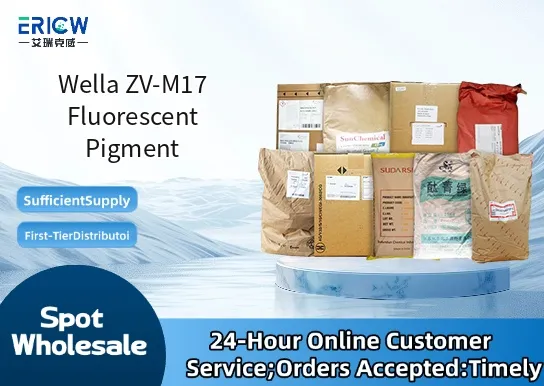
High-intensity fluorescence under UV-A (365 nm) and visible blue light excitation.
Excellent thermal stability up to 220°C, suitable for high-temperature processing.
Good compatibility with acrylic, polyester, and polyurethane resin systems.
Non-bleeding formulation ensures color integrity in solvent-based and water-based media.
Low heavy metal content, compliant with EU REACH and RoHS directives.
Security inks for banknotes, ID cards, and tax stamps.
UV-responsive coatings for industrial signage and safety markings.
Fluorescent masterbatches for PET and PP packaging films.
Special-effect inks in digital textile printing and screen printing.
High-visibility additives in automotive interior trim coatings.
| Chemical Type | Organic fluorescent dye dispersed in polymeric carrier |
| Product Form | Free-flowing granular concentrate |
| Appearance | Yellow-green granules, uniform particle size |
| Primary Applications | Inks, coatings, plastics, and functional films |
| Key Features | UV-stable, non-migrating, low-dust formulation |
| Benefits | Easy dispersion, high chroma, batch-to-batch consistency |
| Storage Conditions | Store in dry, cool place (<25°C), away from direct sunlight |
| Shelf Life | 24 months from date of manufacture under recommended conditions |
Q1: What types of resins and polymers is Wella ZV-M17 compatible with?
A: Wella ZV-M17 demonstrates good compatibility with a broad range of thermoplastic and thermosetting systems, including ABS, PS, PVC, acrylics, polyesters, and epoxy-based matrices. Compatibility should be verified in the final formulation due to potential interactions with additives or curing agents.
Q2: How does thermal processing affect the fluorescence intensity of Wella ZV-M17?
A: Wella ZV-M17 is engineered for thermal stability during standard polymer processing conditions (e.g., extrusion, injection molding). Prolonged exposure above 220°C or extended residence times may lead to gradual reduction in fluorescence brightness; optimal performance is maintained under typical processing windows.
Q3: Can Wella ZV-M17 be used in outdoor applications requiring UV resistance?
A: While Wella ZV-M17 exhibits inherent fluorescence under UV excitation, its long-term photostability in direct sunlight depends on the host matrix and inclusion of appropriate UV stabilizers. For demanding outdoor use, co-stabilization with HALS or UV absorbers is recommended to preserve both color fidelity and emission performance.
Q4: Is Wella ZV-M17 suitable for food-contact plastics?
A: Wella ZV-M17 is not pre-qualified for food-contact applications. Its suitability must be assessed case-by-case against applicable regional regulations (e.g., FDA 21 CFR, EU Framework Regulation), and full compliance requires formulation-level testing and regulatory review by the end-user.
Q5: What is the typical dosage range for achieving strong fluorescent effects?
A: Effective fluorescence is typically achieved at low concentrations—generally ranging from 0.1% to 2% by weight in the final polymer system—depending on base resin transparency, desired intensity, and processing method. Optimization trials are advised to balance performance, dispersion quality, and cost efficiency.
Contact With Us:
E-mail: wangxingqiang@ericwchem.com
Have a Questions? Call Us:
Add:
Building A1, Jiete Industrial Park, Huangpu District, Guangzhou City, Guangdong Province, China