English
 Español
 tiếng việt
 русский
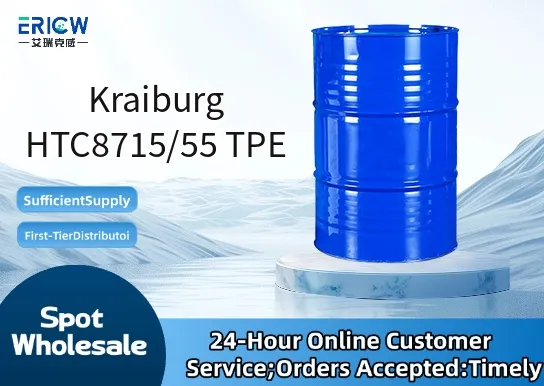
Excellent soft-touch feel with Shore A 55 hardness for ergonomic handling and comfort.
Outstanding thermal stability and long-term compression set resistance for durable performance in dynamic applications.
Good adhesion to polypropylene (PP) and polyethylene (PE) without primer, enabling reliable two-component overmolding.
RoHS-compliant and free of heavy metals, phthalates, and halogens—suitable for consumer and medical-adjacent applications.
Optimized melt flow for efficient processing on standard injection molding and extrusion equipment.
Overmolded grips for power tools, garden equipment, and handheld industrial devices.
Seals and gaskets for automotive interior components and HVAC systems.
Soft-touch control panels and interface elements in home appliances and electronics.
Ergonomic handles for medical instruments and diagnostic devices requiring tactile feedback and cleanability.
Flexible connectors and protective boots in cable management and wiring harness assemblies.
| Chemical Type | Thermoplastic Elastomer (TPE-SEBS based) |
| Product Form | Natural-colored pellets |
| Appearance | Opaque, uniform granules |
| Shore A Hardness | 55 ± 3 |
| Density (g/cm³) | 0.90 ± 0.02 |
| Melt Flow Rate (190 °C / 5 kg) | 12–18 g/10 min |
| Continuous Use Temperature Range | −40 °C to +80 °C |
| Processing Method | Injection molding, extrusion, and two-shot molding |
Q1: What is the primary function of Kraiburg HTC8715/55 TPE in thermoplastic elastomer formulations?
A: HTC8715/55 TPE is a high-performance processing aid and compatibilizer designed to improve melt flow, reduce viscosity, and enhance dispersion of fillers or additives in TPE compounds—particularly in SEBS- and TPE-S-based systems.
Q2: Is HTC8715/55 TPE suitable for applications requiring food contact compliance?
A: While HTC8715/55 TPE is formulated with non-toxic, FDA-acknowledged base components, final regulatory compliance depends on the complete formulation, processing conditions, and end-use requirements. Users must conduct full regulatory evaluation and testing for their specific application.
Q3: How does HTC8715/55 TPE affect surface appearance and gloss in finished TPE parts?
A: It typically promotes improved surface smoothness and consistent gloss by facilitating better polymer chain mobility during processing and reducing surface defects caused by poor filler wetting or phase separation.
Q4: Can HTC8715/55 TPE be used in overmolding applications involving polypropylene or polyethylene substrates?
A: Yes—it is commonly employed to improve adhesion between TPE layers and semi-crystalline polyolefin substrates, especially when optimized through thermal and rheological matching during two-shot or multi-material injection molding.
Contact With Us:
E-mail: wangxingqiang@ericwchem.com
Have a Questions? Call Us:
Add:
Building A1, Jiete Industrial Park, Huangpu District, Guangzhou City, Guangdong Province, China